AOWEISI
AOWEISI SKIN

Biological Material · Skin Management

AOWEISI SKIN

Fem-Regen Matrix

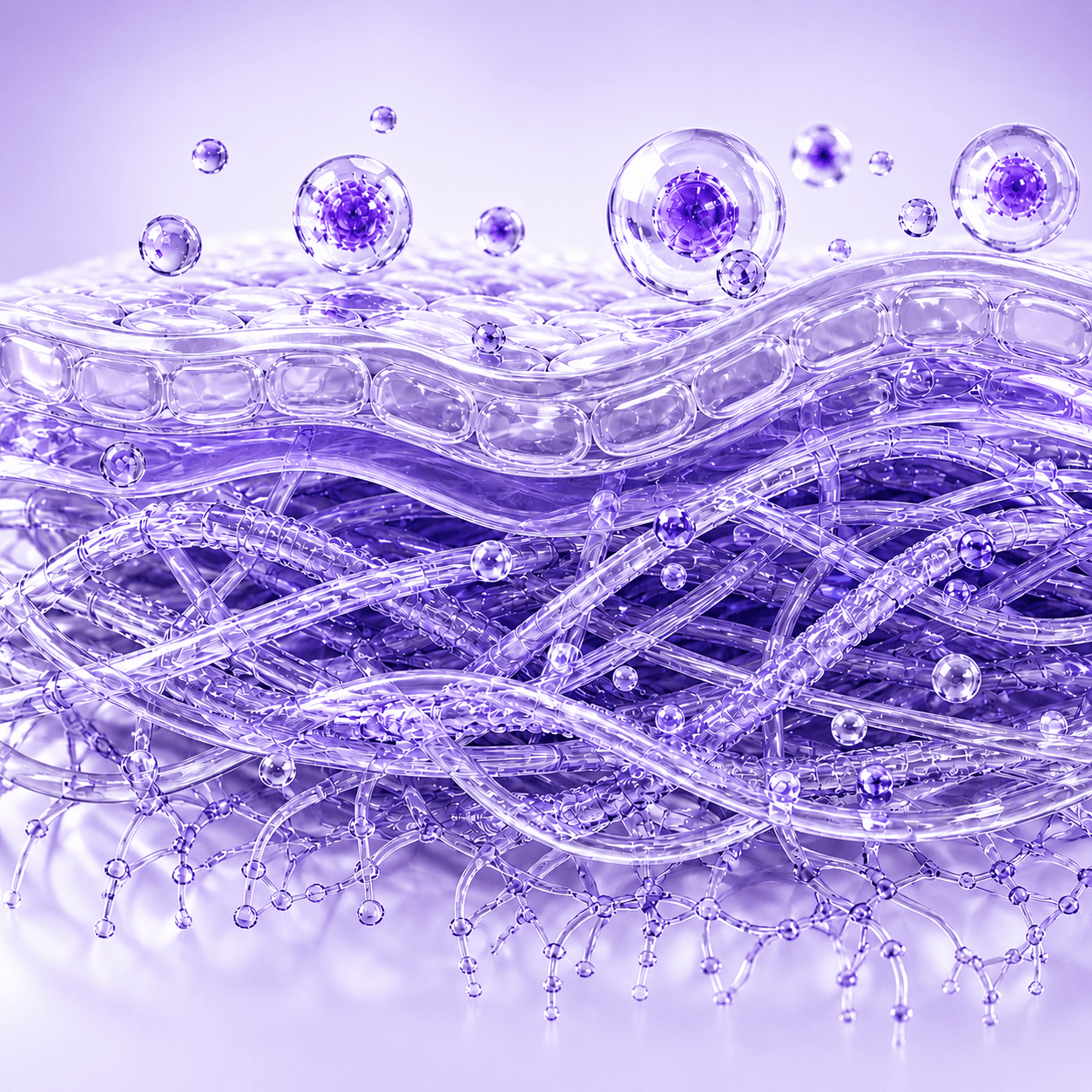
Not conventional intimate care, but a biomaterial system for female mucosal and tissue microenvironment research.

Reference price: $280.00 / box

Buy Now

DiscountQuantityPrice
0%1 - 4$280.00
8% Off5 - 9$258.00
15% Off10 - 24$238.00
22% Off25+$218.00

Current Price

$280.00

/ set

Total: $280.00

1
SKUFEM_REGEN_MATRIXCategoryIntimate Care

Detailed Information

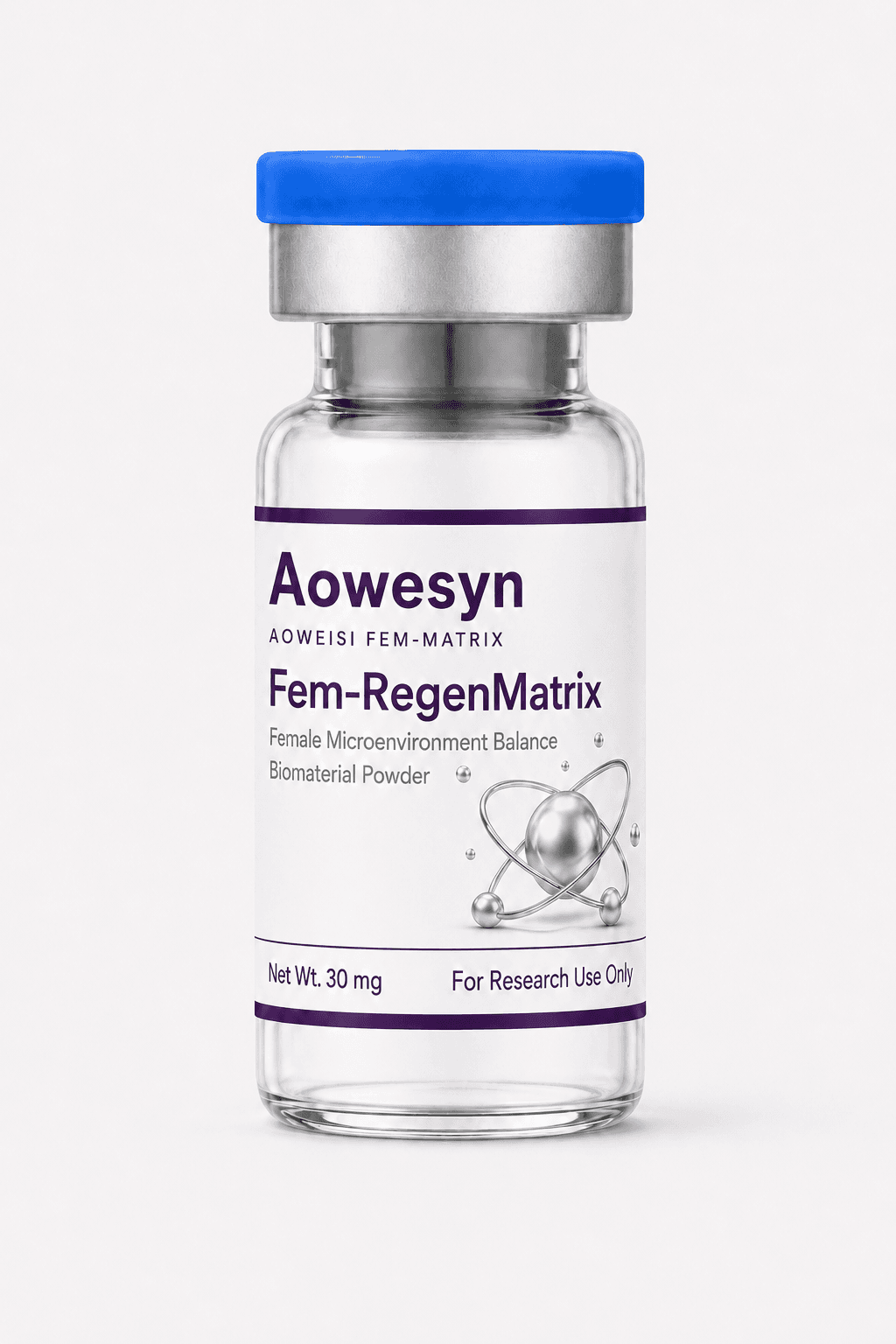
Vial spec

30 mg · lyophilized powder · Appearance: white to off-white cake

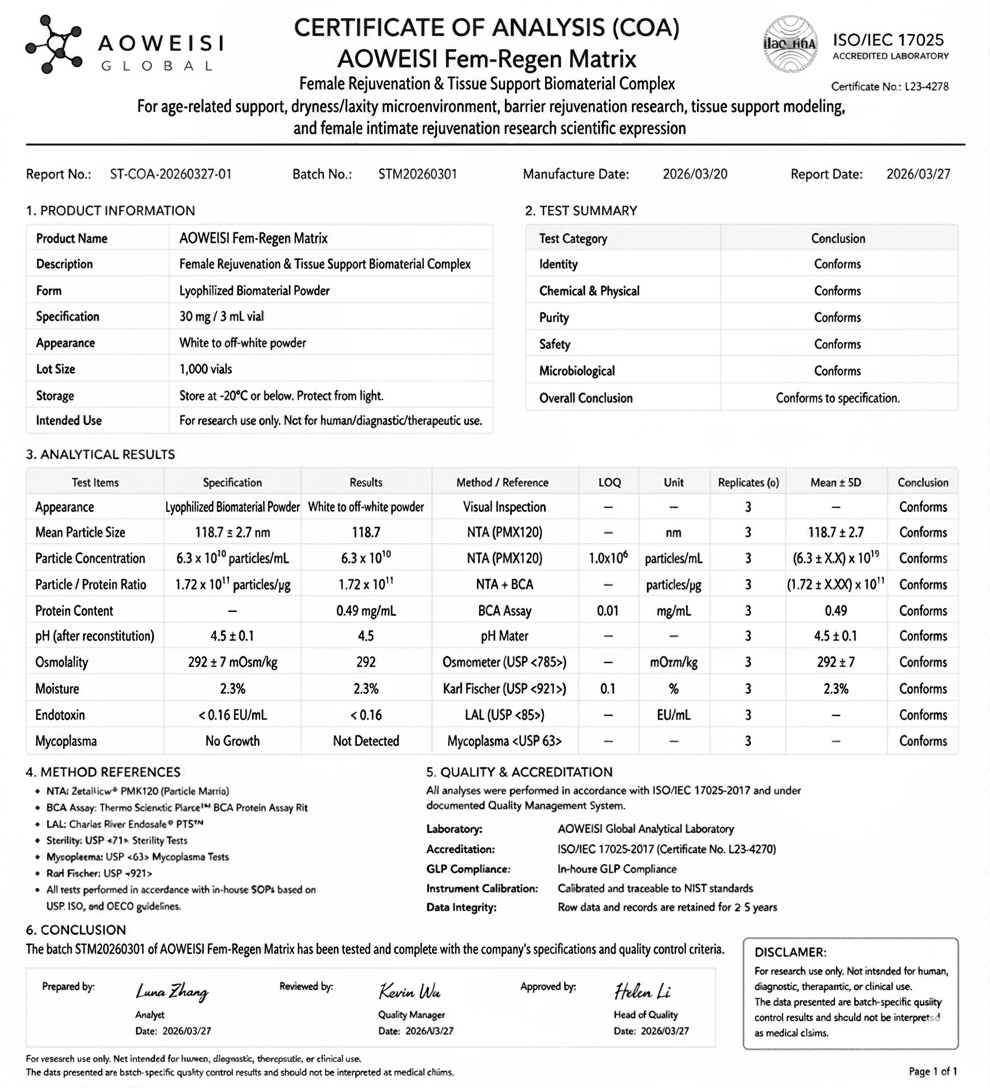
COA

No. FRM-COA-20260327-01 · Lot FRM20260301 · Mfg Mar 20, 2026 · Issued Mar 27, 2026

Size / concentration

Mean size 118.7 nm (spec 100–150 nm) · ~6.3×10¹⁰ particles/mL · Ratio 1.72×10¹¹ particles/µg

Protein / pH

Protein 0.49 mg/mL · pH (1 mg/mL) 4.5 (spec 6.0–7.5) · Moisture 2.3%

Endotoxin / metals

Endotoxin < 0.25 EU/mL · Pb/As < 0.02 ppm (spec ≤ 0.05 ppm)

Sterility / mycoplasma

Sterility: no growth · Mycoplasma: not detected · Residual solvents per USP · Conforms (ISO/IEC 17025, L23-4278)

Lab test image

Product Quality Confirmation Report

Confirms this batch's appearance, specifications, key components, physicochemical indicators and quality standards, ensuring the product meets release quality requirements.

Comparative Mapping

Product Differential Comparison Database

Shows product-specific differences versus traditional categories, including traditional logic, limitations, AOWEISI logic, and key differentiation.

Traditional Research Route

Traditional Research Route

Intimate soothing programs, intimate gels, lubrication-repair products, energy-based intimate care programs, filler-type intimate programs.

Traditional Research Logic

Traditional female intimate tissue rejuvenation mostly centers on lubrication, hydration, local comfort, energy-based care or morphology support—focusing on dryness, discomfort, lower elasticity or local state changes, hoping single-point care can make the intimate area feel more comfortable and supportive in the moment.

Traditional Research Limitations

Conventional thinking mostly stays at 'a bit of lubrication, a bit of stimulation, a bit of support' on the local level. It often lacks a systematic framework for the relationships behind state changes—across hydration environment, tissue support, matrix state, low-inflammation homeostasis and regenerative signaling.

Biomaterial Research Route

Research Direction of This Biomaterial

Focuses on the dryness, lower elasticity, reduced comfort and state swings that appear with age, work-rest pressure, environmental change or daily friction—studying the relationships across hydration reconstruction, tissue support, matrix environment, low-inflammation state and regenerative signaling, to help maintain a more stable, comfortable and vital daily intimate state.

Core Research Difference

Traditional intimate rejuvenation mostly stays at 'lubrication, local repair or morphology support'; AOWEISI focuses on why intimate tissue tends to show dryness, slackness, reduced comfort and recurring states, and how a more systematic biomaterial care approach can help intimate tissue maintain a steadier, lower-burden rejuvenation microenvironment.

Research Mechanism Keywords

Tissue-layer rejuvenation, hydration reconstruction, structural support, matrix environment, low-inflammation state, regenerative-signal regulation, microenvironment homeostasis.

All content above is based on in vitro research, preclinical research, and biomaterial mechanism research, and does not constitute any promise of disease diagnosis, treatment, cure, prevention, or human clinical efficacy.

Research mechanisms and applicable scenarios

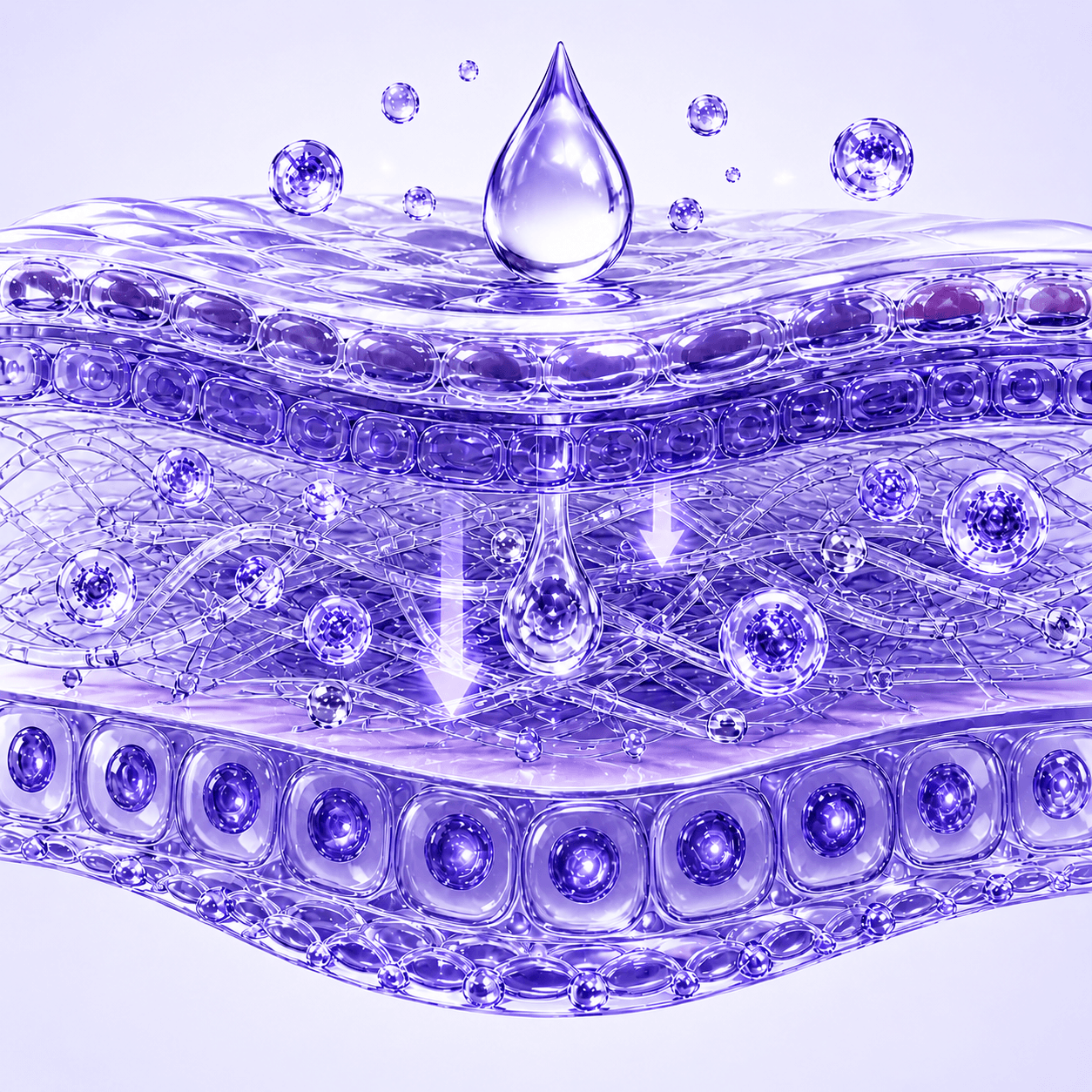
Focused on intimate tissue-layer hydration reconstruction, structural support, and regenerative-expression investigation. Across epithelial renewal, matrix hydration, collagen architecture, low-inflammation homeostasis, and non-hormonal endogenous activation, explores biomaterial-direction pathways related to tissue-layer rejuvenation and structural steady state.
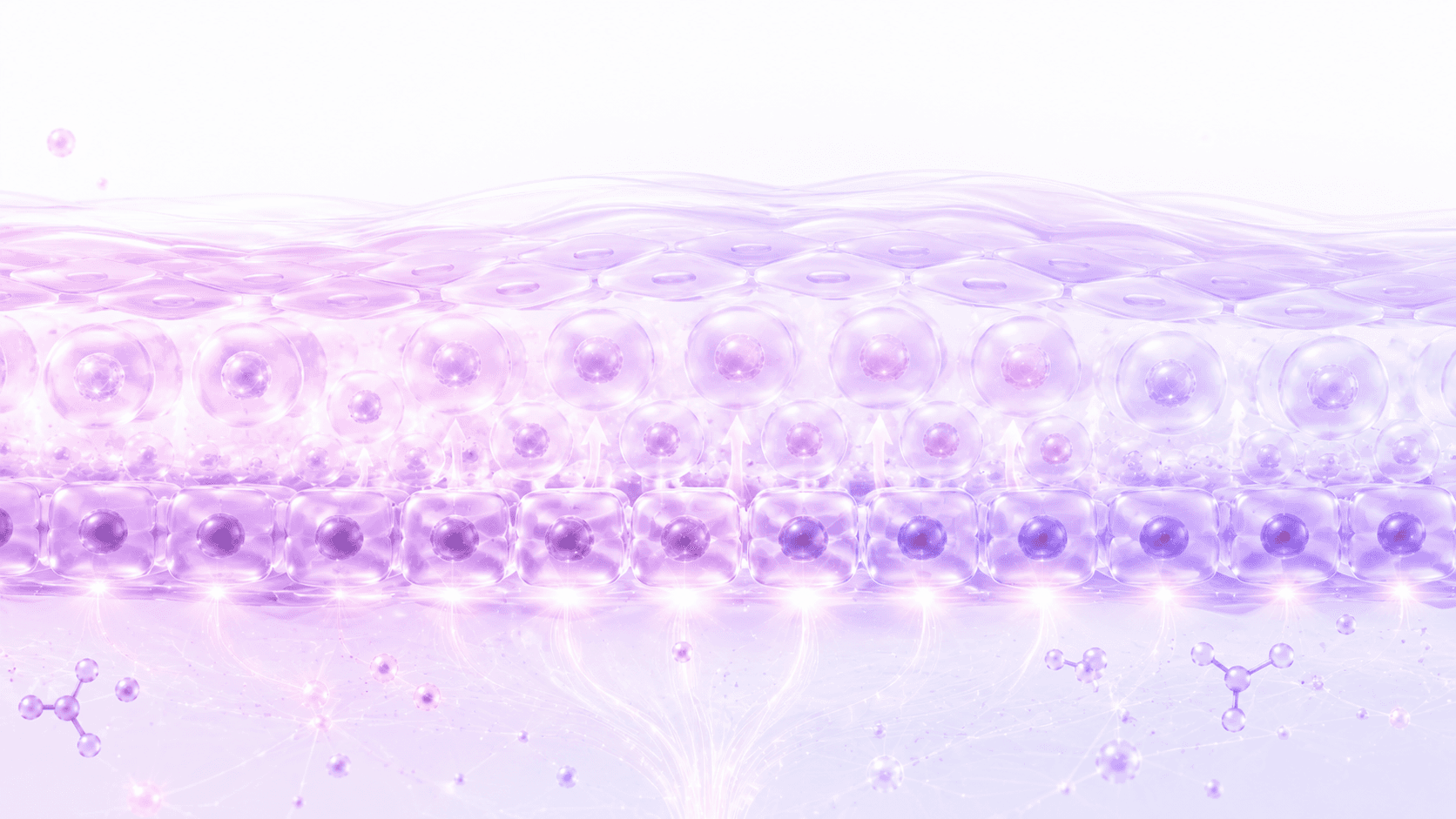
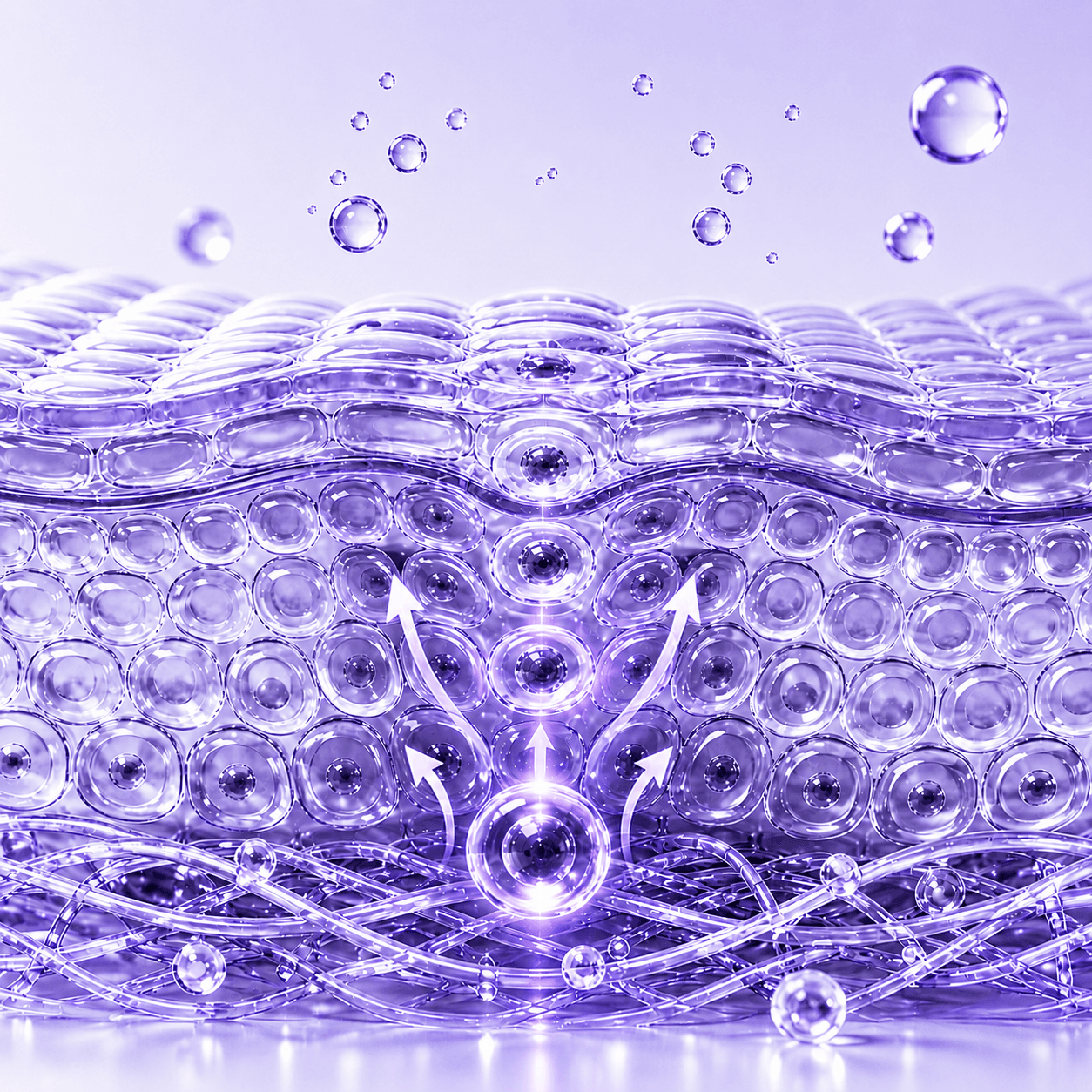
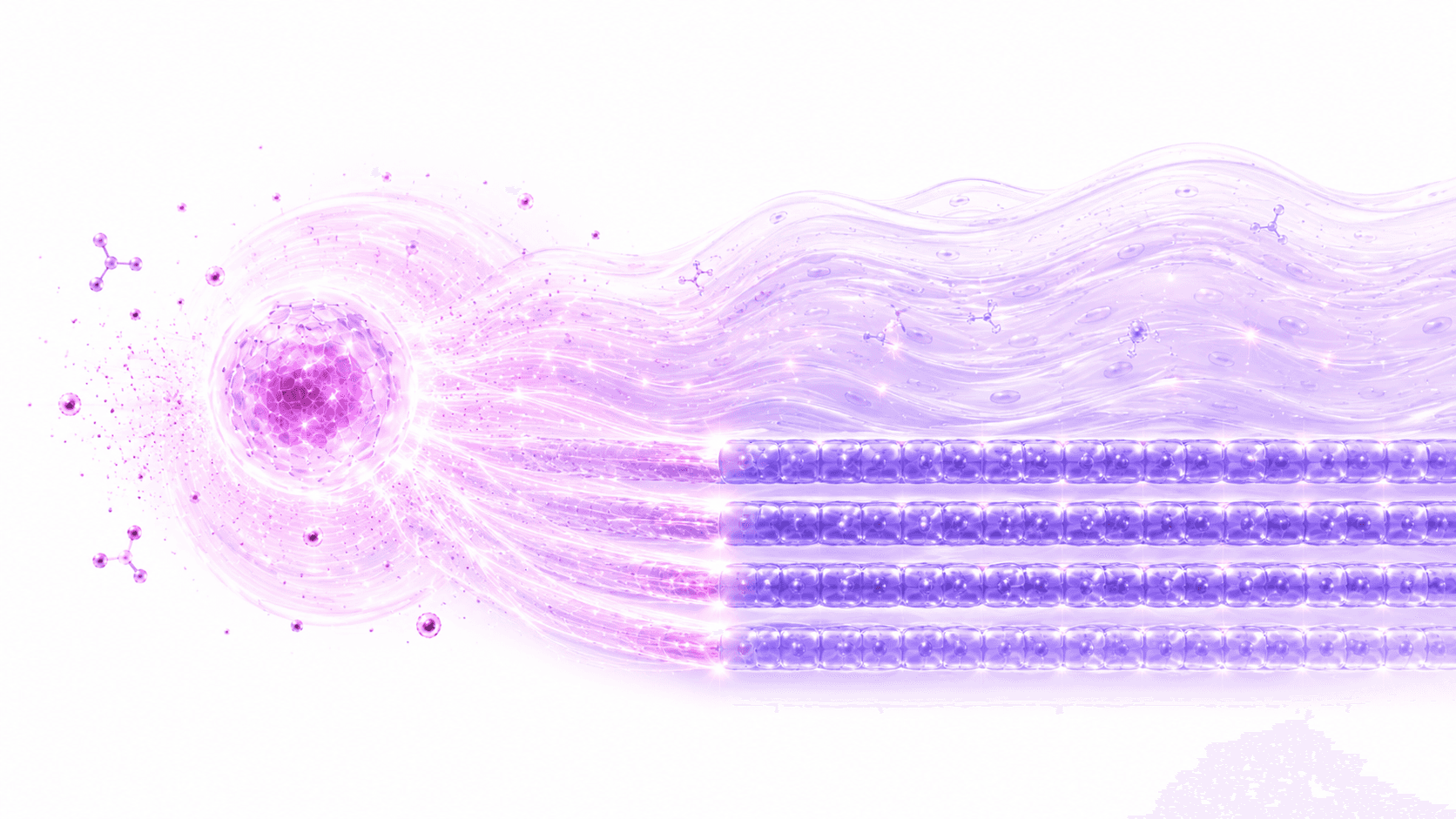
Illustration: KGF/EGF epithelial renewal support

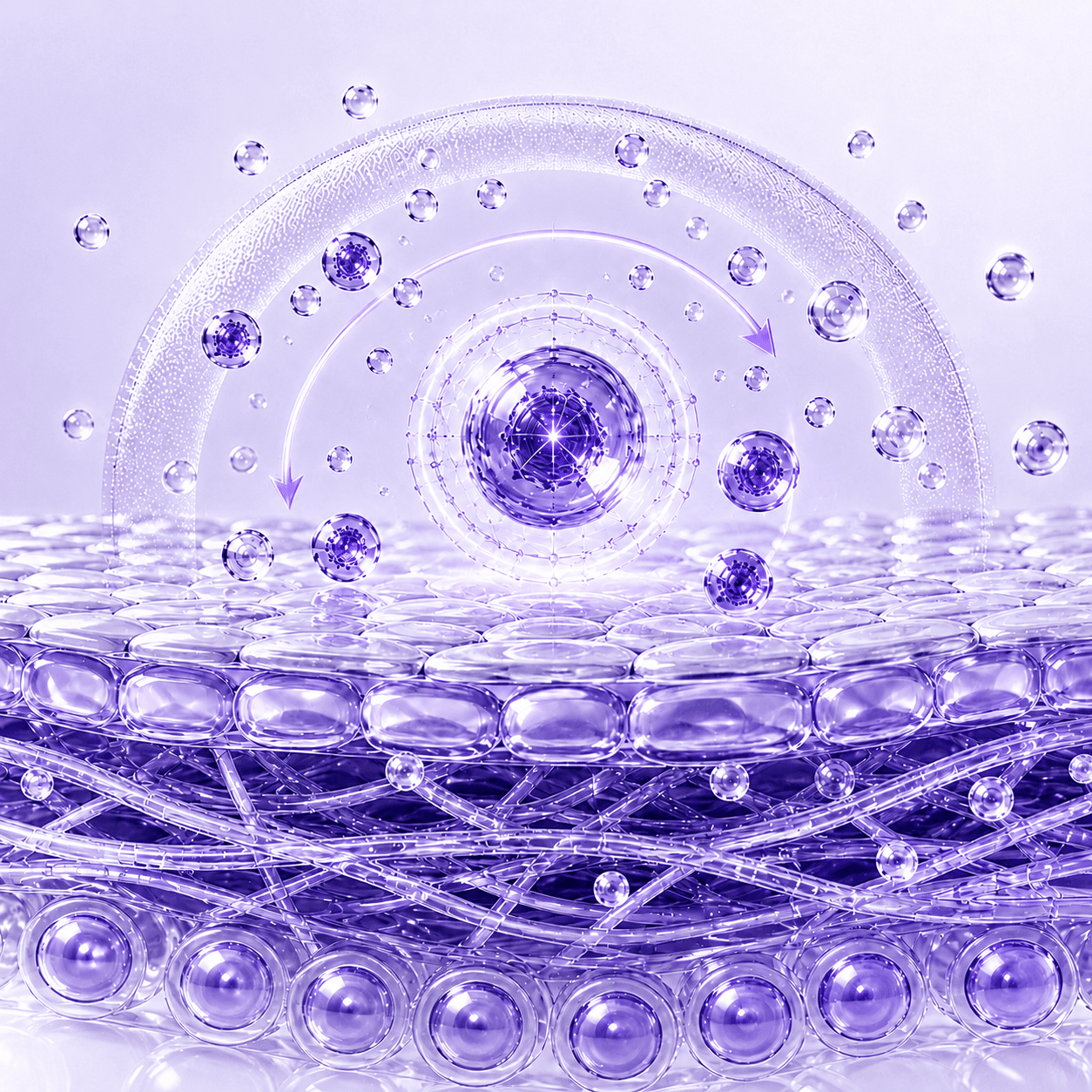
KGF/EGF epithelial regeneration support

Mechanism pathway

Focuses on the thinning surface, reduced comfort and lower refinement that can appear in the intimate area with age, dry friction, daily cleansing, rhythm swings or external stimuli. Around KGF and EGF epithelial signals, it observes the relationship between basal-cell activity, migration and surface renewal. Not simple ingredient supplementation—it focuses on whether the epithelial renewal rhythm stays orderly, helping the intimate surface maintain a gentler, finer, more stable rejuvenation state.

Applicable scenarios
  • Suited for those with less refined intimate surface, increased dryness, reduced comfort, who want to focus on surface renewal and daily rejuvenation management.
KGFEGFEpithelial renewal
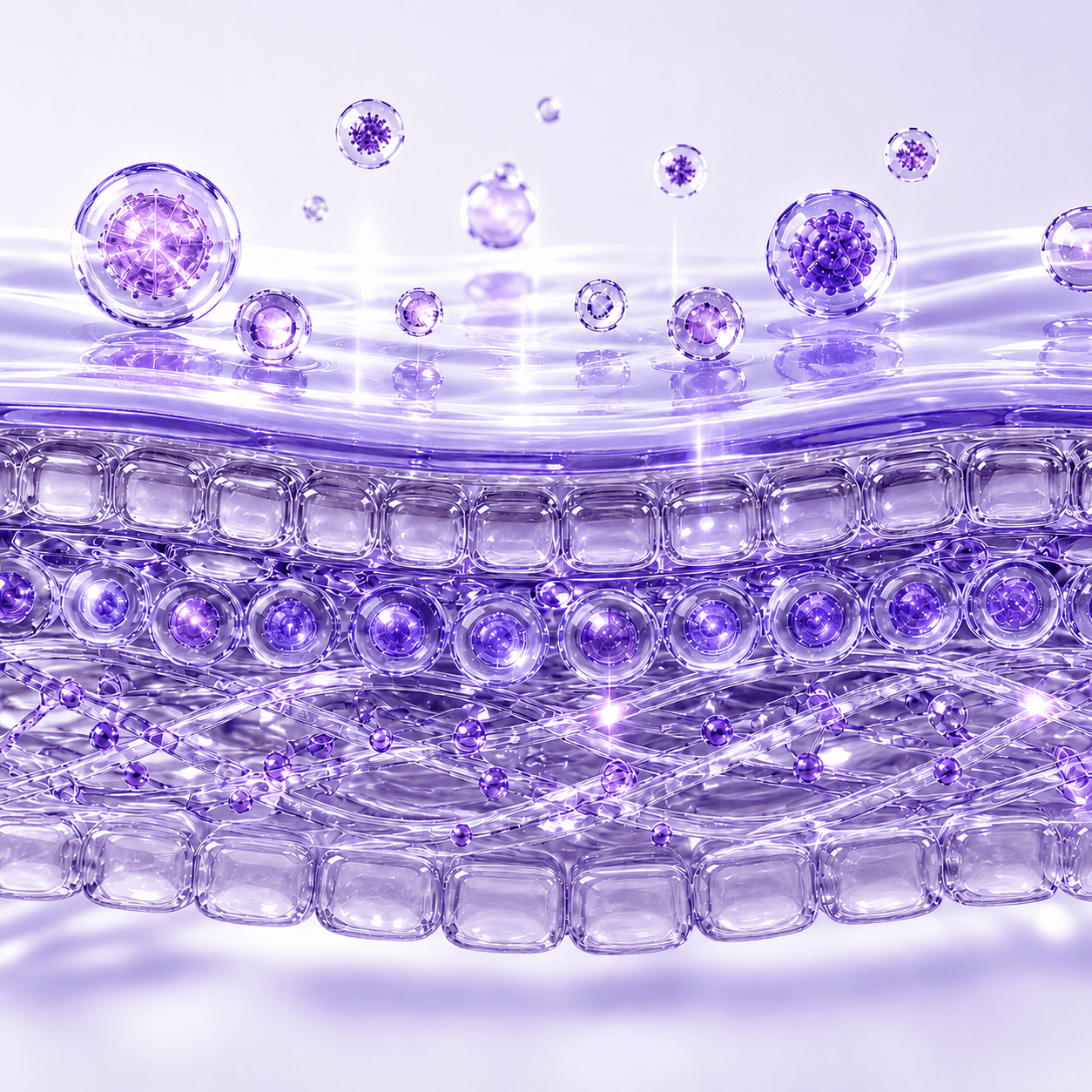
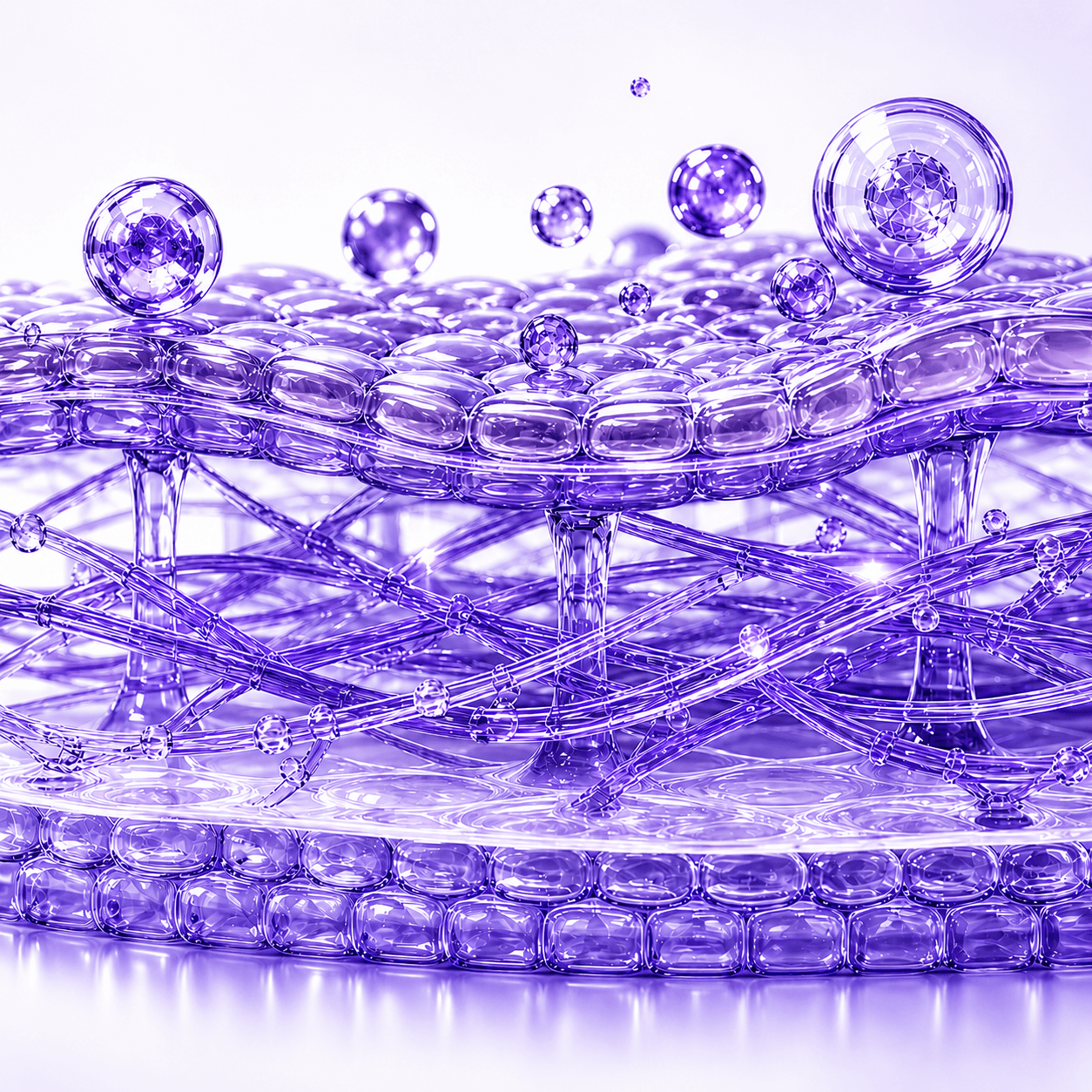
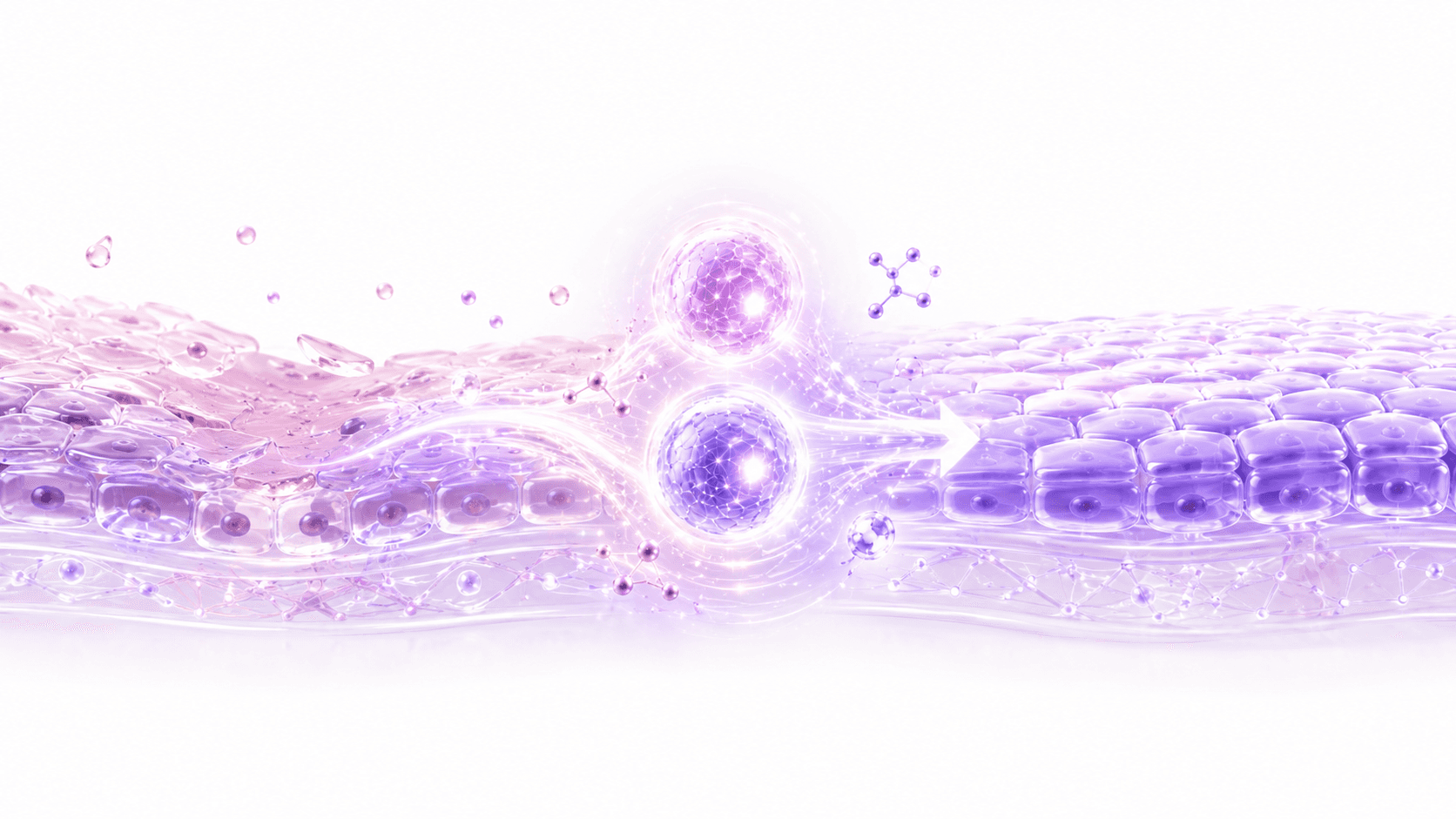
Illustration: HAS2 hydration reconstruction

HAS2 hydration reconstruction

Mechanism pathway

Focuses on the relationship between water environment and tissue comfort in the intimate area. Around HAS2-related pathways, it observes the link between hyaluronic-acid synthesis, matrix water-holding capacity and local moisture state—studying why dryness, tightness, insufficient moisture and reduced softness gradually appear. Rather than a brief 'top-up of water', it supports a steadier hydration rhythm and a more lasting moisture environment.

Applicable scenarios
  • Suited for obvious dryness, insufficient moisture, reduced daily comfort, and those who want a more supple, hydrated intimate state.
HAS2Hyaluronic acidLasting moisture
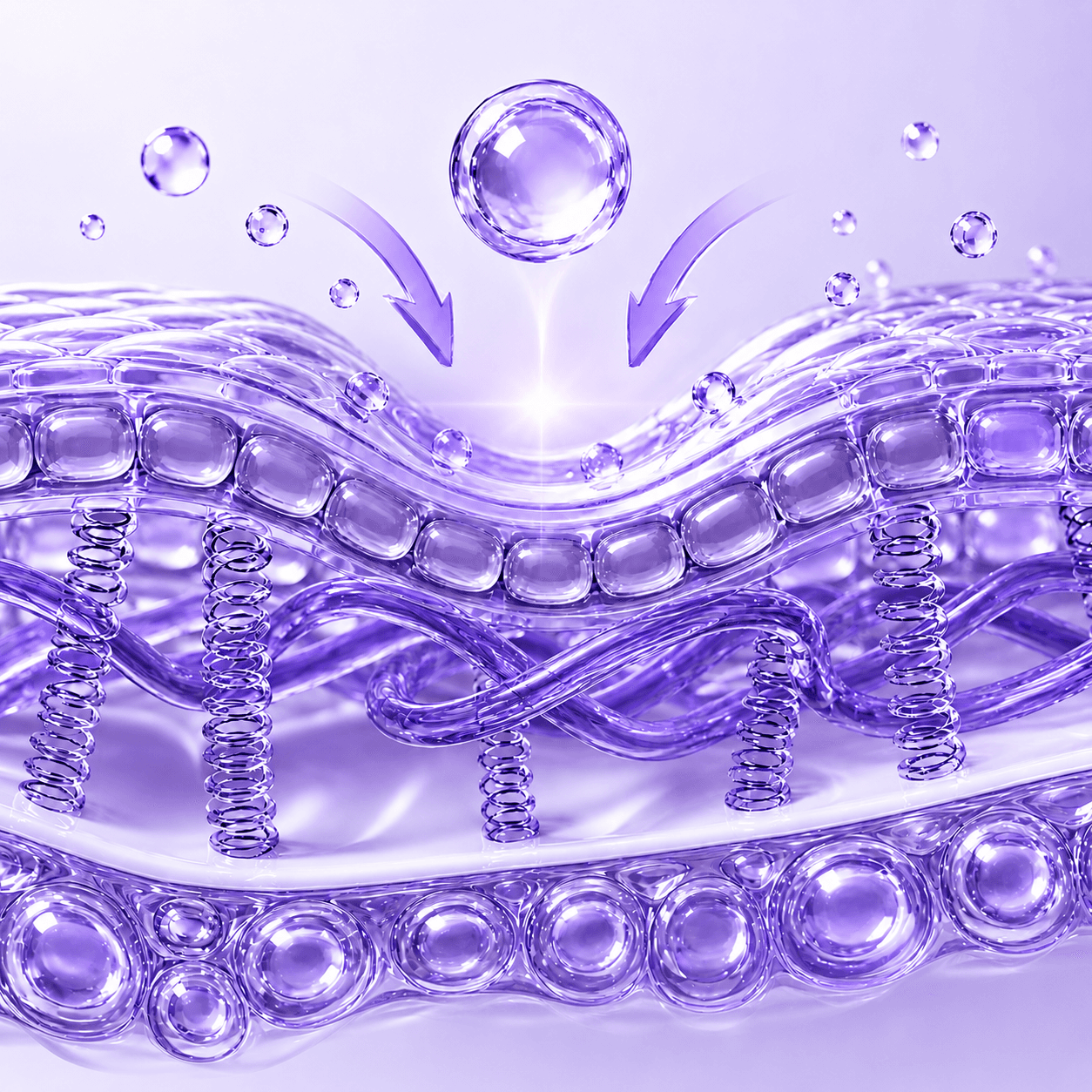
Illustration: TGF-β and type I/III collagen structural support

TGF-β with type I/III collagen structural support

Mechanism pathway

Focuses on the gradually weakening elasticity, reduced firmness and less plumpness of intimate tissue's internal support over time. Around TGF-β, type I/III collagen and fibroblast-related pathways, it observes the relationship between collagen structure, fiber arrangement and mechanical performance. Rather than chasing short-term surface change, it focuses on why support gradually weakens—and how to support a steadier, more orderly structural state.

Applicable scenarios

  • Suited for reduced elasticity, weaker support and pliancy, and those who want to manage rejuvenation from a structural level.
TGF-βType I/III collagenStructural support
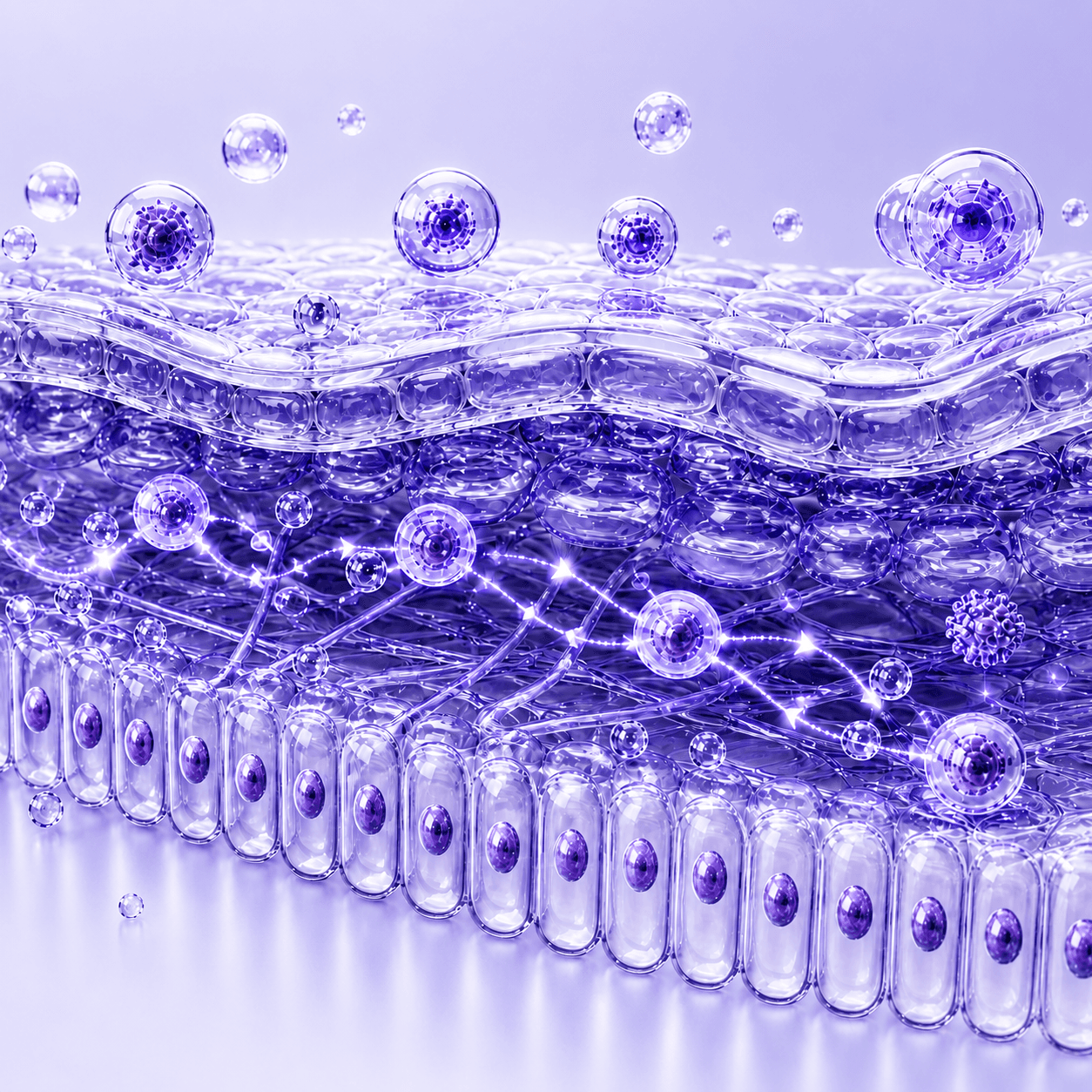
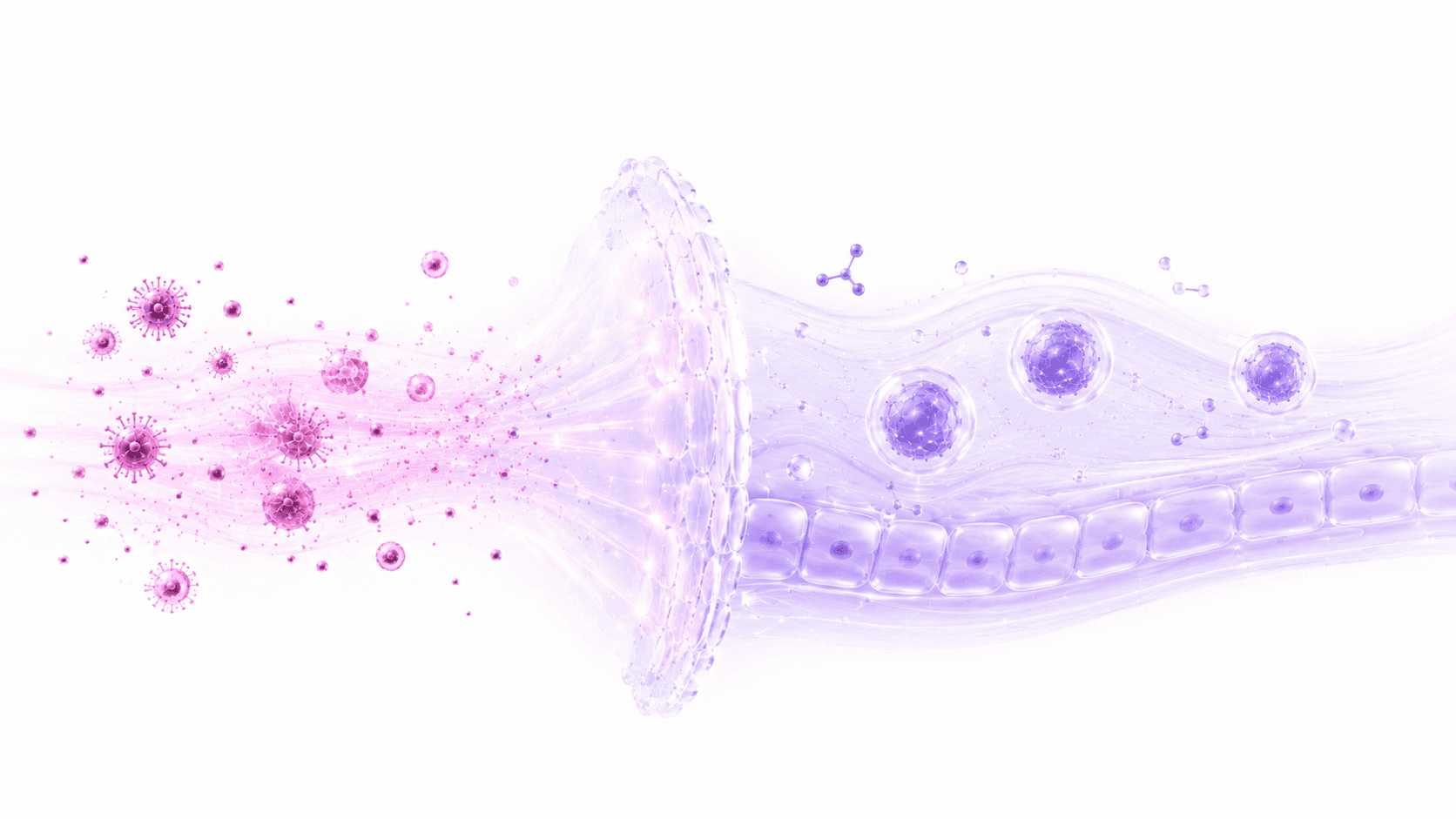
Illustration: low-inflammation homeostasis synergy

Low-inflammation homeostasis synergy

Mechanism pathway

Focuses on amplified local discomfort and recurring swings after friction, cleansing, dryness, rhythm shifts or external stimuli. Around Treg, IL-10 and NF-κB signals, it observes how low-inflammation state, barrier stability and orderly tissue renewal interrelate. Not suppressing sensation, but supporting a calmer, lower-burden, steadier comfort rhythm in the local environment.

Applicable scenarios
  • Suited for those whose intimate area is easily sensitive, with marked comfort swings after external stimuli, and a need for gentle long-term management.
IL-10NF-κBLow-inflammation homeostasis
Illustration: non-hormonal endogenous activation research

Non-hormonal endogenous activation study

Mechanism pathway

Intimate rejuvenation doesn't necessarily depend on external hormonal supplementation; it can start from tissue self-management—observing endogenous repair and renewal networks. Around non-hormonal pathways, it studies how hydration, thickness, elasticity, structural stability and overall comfort interrelate, helping understand why dryness, slackness, lower elasticity and state decline gradually appear. The focus is supporting a more natural, coordinated endogenous rejuvenation expression.

Applicable scenarios

  • Suited for those who want a non-hormonal approach to intimate rejuvenation, value tissue moisture and elasticity, and prefer long-term holistic management.
Non-hormonal pathwayEndogenous repairTissue rejuvenation

Keywords: tissue-layer hydration · epithelial renewal · structural support · regenerative phenotyping · non-hormonal pathway

10 product functions & the issues they address

Plain-language framing
FunctionIssues addressed
01Tissue hydration careDryness, tightness, friction discomfort, insufficient suppleness
02Non-hormonal gentle careConcerns about hormonal stimulation, dependence, preference for low-burden care
03Tissue revitalization supportTired states, lower elasticity feel, slower recovery
04Low-irritation soothing careStuffiness, slight itch, sensitive discomfort, easy state swings
05Elastic & pliant careSlackness, deflation, low elasticity, less pliant touch
06Structural support careReduced support, insufficient fullness, loose-feeling tissue
07Youthful maintenanceAge impression, dryness, lower suppleness, unstable states
08Surface renewal carePost-cleansing tightness, fragile surface, roughness, less refinement
09Endogenous repair supportRecurring discomfort, slow post-care recovery, unstable barrier state
10Collagen support careLower fullness, weaker elasticity, less obvious support
Research framing
Research targetPrimary action direction
Tissue-layer hydration and supple stateSupport a hydrated, soft, comfortable daily intimate state
Non-hormonal gentle care pathwaySupport intimate comfort with low burden, without strong stimulation
Tissue vitality and state recoveryHelp intimate areas keep a plumper, more supple, stable youthful state
Low-stimulus and low-fluctuation stateSupport a soothing, calm, low-sensitivity experience
Elastic network and pliancyHelp maintain tissue elasticity, pliancy and openness
Matrix structure and support stateSupport a steadier, more supported intimate state
Youthful tissue environmentHelp maintain comprehensive hydration, elasticity, fineness and comfort
Surface renewal and barrier integritySupport surface fineness and post-care comfort stability
Endogenous repair rhythmHelp intimate areas keep self-regulation and soothing recovery
Collagen-related support environmentSupport tissue fullness, elasticity and structural stability
R&D logic keywords
Tissue Hydration Support
Collagen Support Maintenance
Matrix Structure Support
Tissue Revitalization Support
Epithelial Renewal Support
Youthful Microenvironment Management
Scenario 1 | Hydrating soothing care when the intimate area lacks suppleness
Hydrating soothing care when the intimate area lacks suppleness

· Research domain

Suited for those whose intimate area tends to be dry, tight, with friction discomfort and insufficient daily suppleness.

· Mechanism pathway

Focus on tissue-layer hydration and softness to keep the intimate area more hydrated and comfortable.

· Observation indicators

Dry tightness may ease; touch is more supple; friction discomfort is less during daily activity.

Research statement

  • Support tissue-layer hydration
  • Maintain surface suppleness and comfort
  • Help reduce friction discomfort from dryness

Individual experiences vary; not a promise of fixed outcomes.

Scenario 2 | Gentle soothing care for those wary of hormonal stimulation
Gentle soothing care for those wary of hormonal stimulation

· Research domain

Suited for those worried about hormones, strong stimulation or dependence, who prefer gentle daily care.

· Mechanism pathway

Focus on a non-hormonal, low-burden care pathway to help the intimate area stay comfortable through gentle means.

· Observation indicators

The care feels gentler; the intimate area accepts it more easily—fits long-term daily care.

Research statement

  • Focus on non-hormonal care pathways
  • Support low-stimulus, low-burden contact
  • Help maintain a gentle, stable care environment

Individual experiences vary; not a promise of fixed outcomes.

Scenario 3 | Revitalizing soothing care when intimate suppleness drops
Revitalizing soothing care when intimate suppleness drops

· Research domain

Suited for those with tired states, lower elasticity, slower recovery, or who want better daily comfort.

· Mechanism pathway

Focus on tissue vitality and state recovery to keep the intimate area plumper, suppler and more stable.

· Observation indicators

Overall comfort improves; deflated tiredness may ease; states feel softer and steadier.

Research statement

  • Focus on tissue vitality and recovery
  • Support synergy of hydration, elasticity and comfort
  • Help maintain a youthful intimate expression

Individual experiences vary; not a promise of fixed outcomes.

Scenario 4 | Fresh soothing care for sensitive intimate discomfort
Fresh soothing care for sensitive intimate discomfort

· Research domain

Suited for those with occasional stuffiness, slight itch, sensitive discomfort or easy state swings.

· Mechanism pathway

Focus on low-stimulus, low-fluctuation states to keep the intimate area calm and soothed.

· Observation indicators

Mild discomfort may ease; the area feels fresher; states are less prone to swings.

Research statement

  • Focus on a low-inflammation microenvironment
  • Support a low-irritation soothing state
  • Help reduce discomfort from external triggers

Individual experiences vary; not a promise of fixed outcomes.

Scenario 5 | Soothing care for slackness or deflated feel
Soothing care for slackness or deflated feel

· Research domain

Suited for those with slackness, deflated feel, low elasticity or less pliant touch.

· Mechanism pathway

Focus on the elastic network and tissue pliancy to keep the intimate area softer and more elastic.

· Observation indicators

Pliancy may improve; deflation and slackness ease more readily; the overall state feels more open.

Research statement

  • Support elastic-network stability
  • Focus on tissue pliancy and rebound
  • Help maintain supple, open tissue state

Individual experiences vary; not a promise of fixed outcomes.

Scenario 6 | Structural soothing care for weak intimate support
Structural soothing care for weak intimate support

· Research domain

Suited for those with reduced support, insufficient fullness or loose-feeling tissue.

· Mechanism pathway

Focus on matrix structure and support to keep a steadier, more plump feel.

· Observation indicators

Support may improve; overall feels fuller; looseness and tiredness ease more readily.

Research statement

  • Support matrix-structure stability
  • Focus on tissue support and fullness
  • Help maintain a stable intimate state

Individual experiences vary; not a promise of fixed outcomes.

Scenario 7 | Soothing care to keep a youthful intimate state
Soothing care to keep a youthful intimate state

· Research domain

Suited for those with age impression, dryness, lower suppleness, or unstable overall states.

· Mechanism pathway

Focus on a youthful tissue microenvironment with synergy across hydration, elasticity, fineness and comfort.

· Observation indicators

Suppleness and elasticity may improve; states are steadier; the youthful feel is more obvious.

Research statement

  • Focus on youthful microenvironment management
  • Support synergy of hydration, elasticity and fineness
  • Help maintain a long-term comfortable state

Individual experiences vary; not a promise of fixed outcomes.

Scenario 8 | Refined soothing care for rough, fragile surface after cleansing
Refined soothing care for rough, fragile surface after cleansing

· Research domain

Suited for those with tightness after cleansing, fragile surface, roughness, or post-care discomfort.

· Mechanism pathway

Focus on surface renewal and barrier integrity to keep the intimate area finer and gentler.

· Observation indicators

Surface touch may be finer; post-cleansing tightness eases; post-care feels more comfortable.

Research statement

  • Support surface renewal rhythm
  • Focus on barrier integrity and suppleness
  • Help improve roughness and tightness

Individual experiences vary; not a promise of fixed outcomes.

Scenario 9 | Reparative soothing care for recurring discomfort and slow recovery
Reparative soothing care for recurring discomfort and slow recovery

· Research domain

Suited for those with recurring discomfort, slow recovery after care, or unstable barrier state.

· Mechanism pathway

Focus on endogenous repair rhythm to help the intimate area keep self-regulation, soothing recovery and low fluctuation.

· Observation indicators

State swings may reduce; recovery to comfort is easier; daily stability is better.

Research statement

  • Support endogenous repair rhythm
  • Focus on barrier recovery and comfort stability
  • Help reduce discomfort from recurring swings

Individual experiences vary; not a promise of fixed outcomes.

Scenario 10 | Collagen-support soothing care for declining intimate fullness
Collagen-support soothing care for declining intimate fullness

· Research domain

Suited for those with declining fullness, weaker elasticity, or who want stronger long-term support care.

· Mechanism pathway

Focus on the collagen-related support environment and matrix stability to keep the intimate area plumper, suppler and more supported.

· Observation indicators

Fullness may improve; tissue feels more pliant; overall support is more obvious.

Research statement

  • Focus on the collagen-support environment
  • Support synergy of matrix structure and elasticity
  • Help maintain tissue fullness and stability

Individual experiences vary; not a promise of fixed outcomes.

This product is a research-use biomaterial sample intended only for in vitro research, materials evaluation, and formulation development reference. Nothing herein constitutes diagnosis, treatment, cure, or prevention of any disease, nor a guarantee of results after consumer use. For gynecologic clinical or intimate health management contexts, follow qualified physician or pharmacist guidance.

Partnership

Discuss Professional Partnership

For material procurement, professional program partnerships, or custom development inquiries, please contact us through our partnership channel.