AOWEISI
AOWEISI SKIN

Biological Material · Skin Management

AOWEISI SKIN

Fem-Balance Matrix

Not conventional intimate care, but a biomaterial system for female mucosal and tissue microenvironment research.

Reference price: $280.00 / box

Buy Now

DiscountQuantityPrice
0%1 - 4$280.00
8% Off5 - 9$258.00
15% Off10 - 24$238.00
22% Off25+$218.00

Current Price

$280.00

/ set

Total: $280.00

1
SKUFEM_BALANCE_MATRIXCategoryIntimate Care

Detailed Information

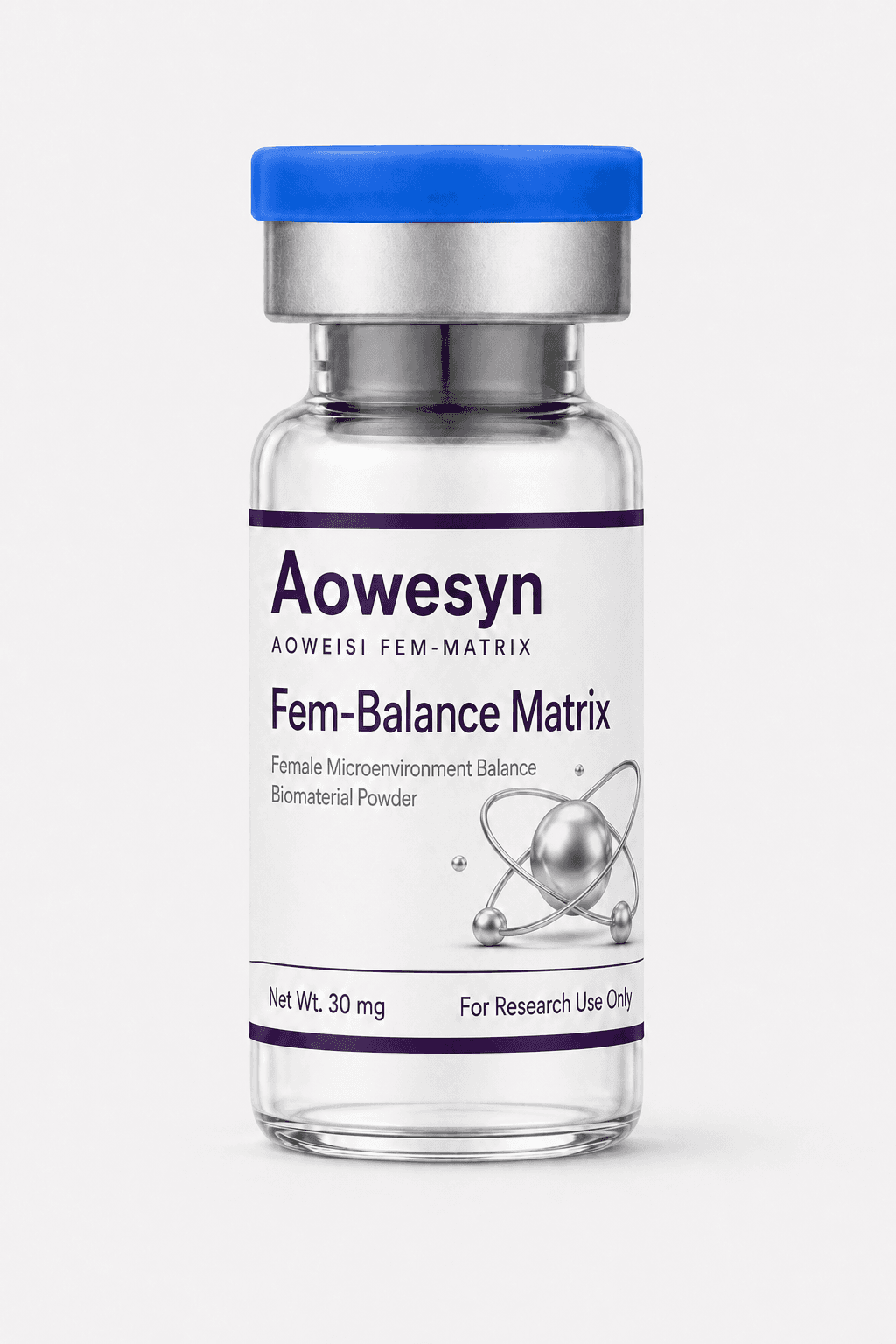
Vial spec

30 mg · lyophilized powder · Appearance: white to off-white cake

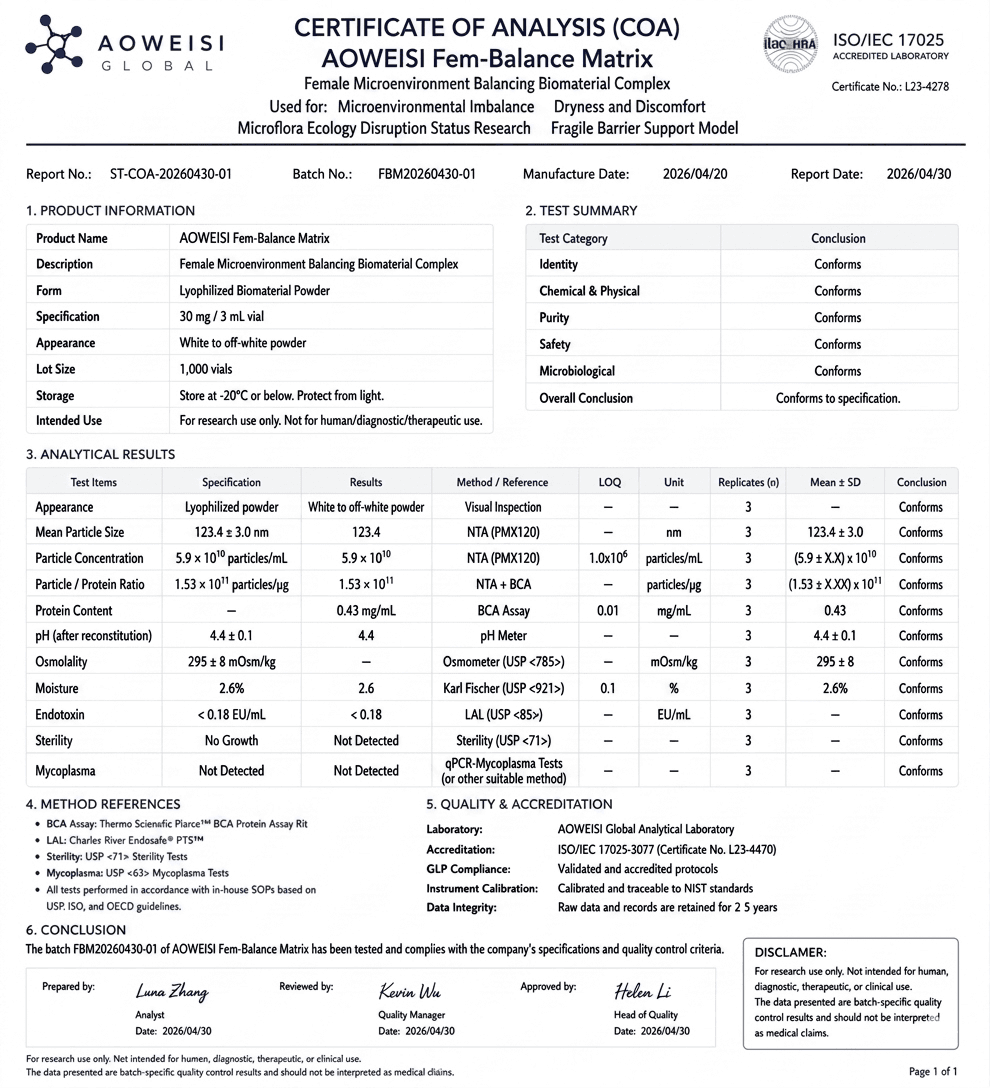
COA

No. FBM-COA-20260430-01 · Lot FBM20260430-01 · Mfg Apr 20, 2026 · Issued Apr 30, 2026

Size / concentration

Mean size 123.4 nm (spec 100–150 nm) · ~5.9×10¹⁰ particles/mL · Ratio 1.53×10¹¹ particles/µg

Protein / pH

Protein 0.43 mg/mL · pH (1 mg/mL) 4.4 (spec 6.0–7.5) · Moisture 2.6%

Endotoxin / metals

Endotoxin < 0.5 EU/mL · Pb/As < 0.02 ppm (spec ≤ 0.05 ppm)

Sterility / mycoplasma

Sterility: no growth · Mycoplasma: not detected · Residual solvents per USP · Conforms (ISO/IEC 17025, L23-4278)

Lab test image

Product Quality Confirmation Report

Confirms this batch's appearance, specifications, key components, physicochemical indicators and quality standards, ensuring the product meets release quality requirements.

Comparative Mapping

Product Differential Comparison Database

Shows product-specific differences versus traditional categories, including traditional logic, limitations, AOWEISI logic, and key differentiation.

Traditional Research Route

Traditional Research Route

Female intimate care solutions, probiotic gels, intimate soothing products, lubrication-care products.

Traditional Research Logic

Traditional female intimate care mostly centers on cleansing, comfort, odor management, pH balance, probiotic supplementation or lubricating soothing—focusing on daily cleansing and local comfort to make the intimate area feel fresher and more comfortable in the moment.

Traditional Research Limitations

Conventional thinking mostly stays at cleansing, comfort and daily care. It often lacks a systematic framework for why the intimate area keeps showing dryness, sensitivity, discomfort or state swings, and how mucosal-surface state, hydration environment, barrier comfort and microenvironment balance interrelate.

Biomaterial Research Route

Research Direction of This Biomaterial

Focuses on the dryness, sensitivity, discomfort and state swings that appear after rhythm changes, stress, cleansing methods, environmental change or daily friction—studying the relationship across mucosal surface, hydration environment, barrier comfort, low-inflammation state and microenvironment balance, to help maintain a more stable, comfortable daily intimate microenvironment.

Core Research Difference

Traditional intimate care mostly stays at 'a quick rinse, some soothing, a momentary comfort'; AOWEISI focuses on why the intimate area keeps being unstable—why discomfort follows cleansing, rhythm shifts, environment changes or external stimuli—and how a more systematic biomaterial care approach can help maintain a steadier, lower-burden daily state.

Research Mechanism Keywords

Female microenvironment, mucosal surface, hydration environment, barrier comfort, low-inflammation state, microenvironment balance.

All content above is based on in vitro research, preclinical research, and biomaterial mechanism research, and does not constitute any promise of disease diagnosis, treatment, cure, prevention, or human clinical efficacy.

Research mechanisms and applicable scenarios

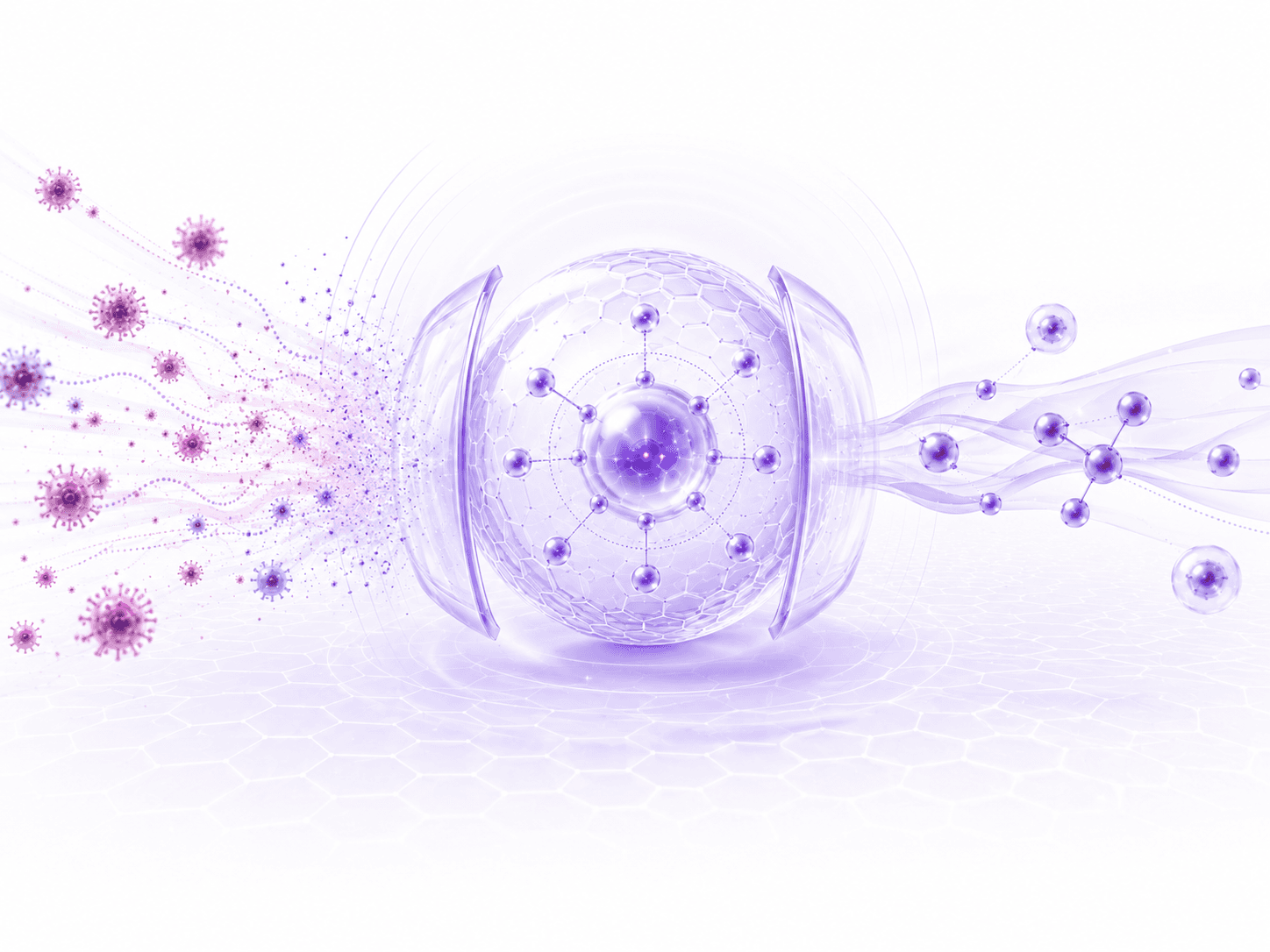
Illustration: mucosal microenvironment variable balance

Microenvironment homeostasis support

Mechanism pathway

Focuses on the dryness, stuffiness, reduced comfort and recurring swings that appear in the intimate area after rhythm changes, long sitting in heat, frequent cleansing, seasonal change or external stimuli. Around the relationship between pH balance, microbiome state, oxidative pressure and local sensitivity response, it studies how the intimate surface microenvironment can maintain a steadier, gentler daily state. Not a brief 'easing', but understanding why states keep swinging—and how to support a more comfortable microenvironment baseline.

Applicable scenarios
  • Suited for daily intimate comfort management, state swings after long sitting in heat, increased sensitivity during seasonal change, and long-term microenvironment-stability care.
ROSMicroenv. homeostasispH balance
Illustration: immune inflammation noise reduction

Immune-inflammation noise reduction

Mechanism pathway

Focuses on how local reactions easily amplify under stimuli, friction, environmental change or unstable states in the intimate area. Around Th1/Treg balance, NF-κB signaling and IFN-γ, TNF-α related pathways, it observes the path from 'mild discomfort' to 'recurring swings'. Not suppressing sensation, but supporting the intimate microenvironment to keep a calmer low-inflammation state—reducing repeated tension and amplified discomfort.

Applicable scenarios
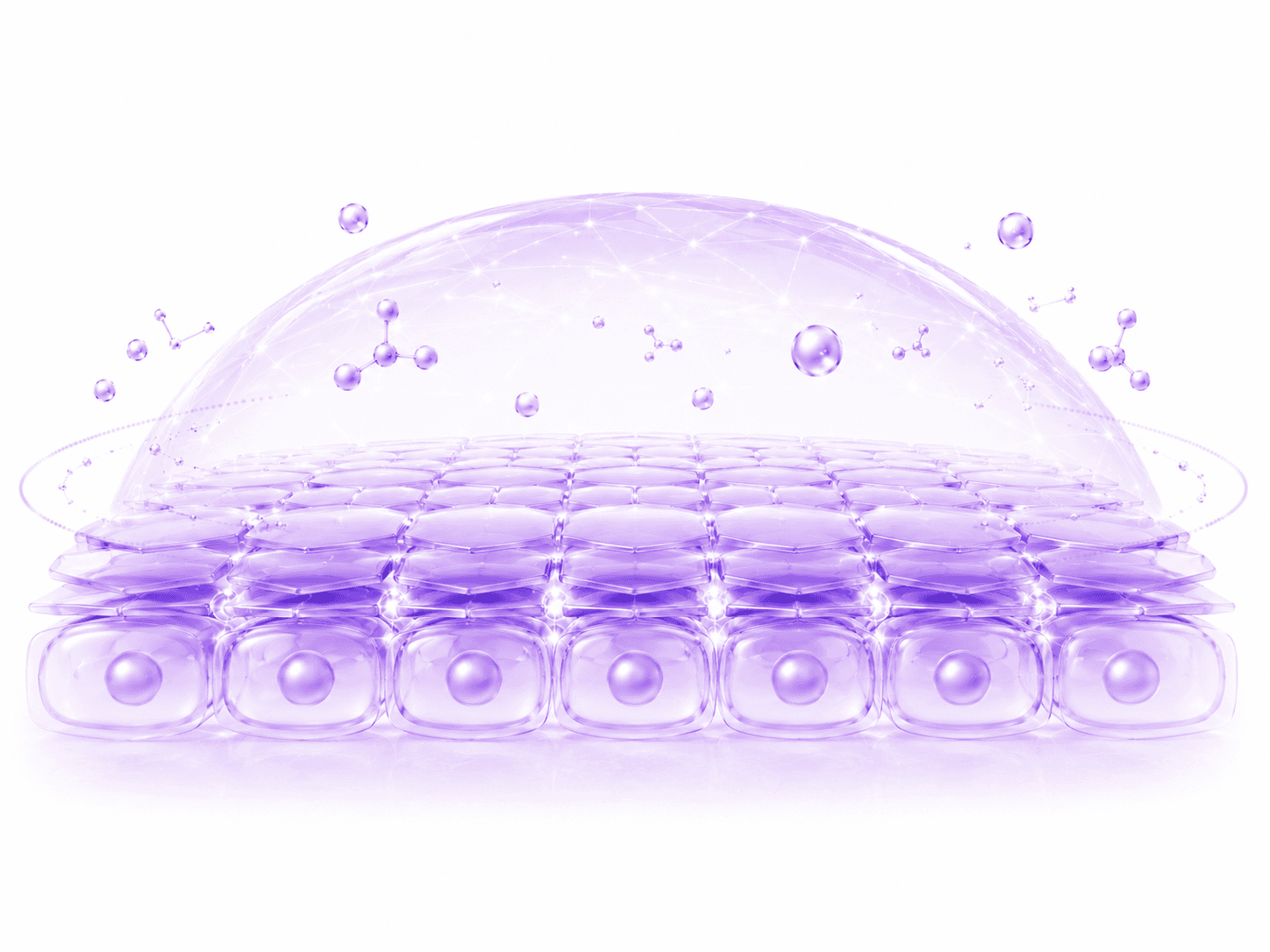
  • Suited for those whose intimate area easily becomes sensitive, with reduced comfort after external stimuli and obvious local swings, who need gentle daily management.
Th1NF-κBLow-inflammation state
Illustration: tight junctions and barrier integrity

Barrier integrity maintenance

Mechanism pathway

Focuses on whether the intimate mucosal surface stays intact, soft and stable. Around tight-junction-related structures like E-Cadherin and Occludin, it observes why fragility, irritation and reduced tolerance appear after frequent cleansing, dryness, friction or external stimuli. Not emphasizing 'damage repair', but supporting barrier integrity, permeability balance and local tolerance—helping the intimate environment maintain a steadier comfort baseline.

Applicable scenarios

  • Suited for intimate-area dryness, fragility, reduced post-cleansing comfort, heightened sensitivity to external stimuli, and daily care that values barrier stability.
E-CadherinOccludinBarrier homeostasis
Illustration: mucosal surface hydration milieu

Hydration environment management

Mechanism pathway

Focuses on the relationship between water environment, moisture state and comfort on the intimate mucosal surface. Around surface hydration, local moisture and microecology recovery, it observes why dryness, tightness or reduced comfort appear after dryness, friction, environmental change or improper daily care. Not just 'adding a bit of moisture', but supporting a softer, more balanced moisture rhythm for the intimate environment.

Applicable scenarios

  • Suited for obvious intimate dryness, insufficient moisture, reduced daily comfort, and those seeking gentle hydration and comfort management.
Surface comfortHydrationMoisture balance
Illustration: irritation–inflammation–fragile barrier–re-irritation cycle

Recurring-loop intervention study

Mechanism pathway

Focuses on the common 'stimulus → local discomfort → barrier swing → renewed sensitivity' loop in the intimate area. Around low-inflammation homeostasis, surface-barrier synergy and microenvironment-management logic, it observes why states keep oscillating rather than being briefly uncomfortable. The focus is not on single-time soothing, but on supporting the intimate environment in gradually building a steadier rhythm and reducing the daily burden of recurring swings.

Applicable scenarios

  • Suited for those with recurrently unstable intimate states, fluctuating comfort, and repeated swings after daily stimuli, who want long-term state management.
Low-inflammation homeostasisLoop interventionLong-term homeostasis

Keywords: microenvironment homeostasis · low-inflammation state · barrier comfort · hydration management · daily-care research

5 product functions & the issues they address

Plain-language framing
FunctionIssues addressed
01Low-irritation soothing careOccasional discomfort, stuffiness, slight itch, easy state swings
02Barrier suppleness guardDryness, friction discomfort, post-sitting discomfort, fragile sensitivity
03Gentle daily careTightness after cleansing, friction from hygiene products, stuffiness in tight clothing
04Comfortable freshness managementStuffiness after sweat, season change, long sitting/commuting
05Microecology balance supportUnstable intimate environment, lower freshness, swings around the cycle
Research framing
Research targetPrimary action direction
Low-stimulus, low-fluctuation state in the intimate areaSupport a calm, soothing, low-burden daily state
Mucosal-barrier hydration and pliancyReduce dryness/friction, keep supple comfort
Mucosal compatibility under daily cleansing and careLess tightness after cleansing; less discomfort after care
Comfort stability under temperature/humidity changeKeep fresh, breathable, stable experience
Intimate microbiome and pH balanceMaintain a balanced, fresh, comfortable intimate state
R&D logic keywords
Low-irritation Soothing Support
Mucosal Barrier Comfort Support
Moisture–Thermal Microenvironment Management
Microecology Balance Support

Feminine intimate mucosa: five research scenarios

Scenario 1 | Soothing care for stuffiness and slight itch in the intimate area
Soothing care for stuffiness and slight itch in the intimate area

· Research domain

Suited for those whose intimate area occasionally feels stuffy, slightly itchy or tense, with states easily affected by environment.

· Mechanism pathway

Focuses on a low-stimulus, low-fluctuation state to keep the intimate area calm, soothed and steady.

· Observation indicators

Discomfort may ease; overall feels fresher and more relaxed; daily comfort stays steadier.

Research statement

  • Focus on a low-stimulus mucosal-surface state
  • Support intimate microenvironment stability
  • Help reduce discomfort from external triggers

Individual experiences vary; not a promise of fixed outcomes.

Scenario 2 | Barrier soothing care for dryness and tightness in the intimate area
Barrier soothing care for dryness and tightness in the intimate area

· Research domain

Suited for those whose intimate area easily feels dry, tight or uncomfortable after long sitting, clothing friction or temp/humidity changes.

· Mechanism pathway

Focuses on mucosal-barrier hydration and pliancy to reduce friction discomfort and maintain supple comfort.

· Observation indicators

Dryness and friction discomfort may ease; the intimate area feels more supple; longer activity feels more comfortable.

Research statement

  • Support hydration of the mucosal barrier
  • Maintain surface water-locking and supple feel
  • Help reduce sensitivity from friction

Individual experiences vary; not a promise of fixed outcomes.

Scenario 3 | Gentle soothing care for stuffiness after wearing tight clothing
Gentle soothing care for stuffiness after wearing tight clothing

· Research domain

Suited for those who easily feel tight, dry or stuffy after cleansing, using hygiene products or wearing tight clothing.

· Mechanism pathway

Focuses on mucosal compatibility during daily cleansing/care to keep the intimate area gentle, comfortable and free of tightness.

· Observation indicators

Less likely to feel tight after cleansing; more comfortable while using hygiene products; overall freshness is better.

Research statement

  • Focus on hydration balance after daily cleansing
  • Support gentle compatibility of the mucosal surface
  • Help maintain pH and surface comfort

Individual experiences vary; not a promise of fixed outcomes.

Scenario 4 | Fresh soothing care for stuffy heat from long sitting
Fresh soothing care for stuffy heat from long sitting

· Research domain

Suited for those whose intimate area feels stuffy and not fresh after exercise sweating, seasonal change, long commuting or sitting.

· Mechanism pathway

Focuses on the intimate area's temperature/humidity environment and freshness to reduce stuffiness and keep a more breathable, comfortable daily state.

· Observation indicators

Stuffiness may ease; freshness is more noticeable; longer time in clothing feels more comfortable.

Research statement

  • Focus on temperature/humidity microenvironment stability
  • Support fresh, comfortable intimate states
  • Help improve stability under dynamic environments

Individual experiences vary; not a promise of fixed outcomes.

Scenario 5 | Soothing care to keep intimate microbiome balance
Soothing care to keep intimate microbiome balance

· Research domain

Suited for those whose intimate environment is affected by rhythm, cycle, season or care habits, with reduced freshness and unstable states.

· Mechanism pathway

Focuses on balance of intimate microbiome and pH environment to keep a low-burden, fresh, stable care state.

· Observation indicators

Freshness may improve; states around the cycle feel steadier; daily comfort is easier to sustain.

Research statement

  • Support intimate microbiome balance
  • Focus on pH environment and mucosal comfort
  • Help maintain long-term fresh, stable intimate states

Individual experiences vary; not a promise of fixed outcomes.

This product is a research-use biomaterial sample intended only for in vitro research, materials evaluation, and formulation development reference. Nothing herein constitutes diagnosis, treatment, cure, or prevention of any disease, nor a guarantee of results after consumer use. For gynecologic clinical or intimate health management contexts, follow qualified physician or pharmacist guidance.

Partnership

Discuss Professional Partnership

For material procurement, professional program partnerships, or custom development inquiries, please contact us through our partnership channel.