INCI
INCI Name Assigned
Mono ID 40978 · standardized ingredient identity
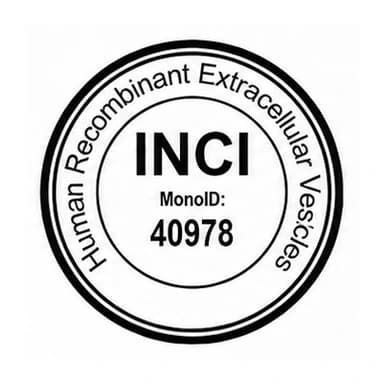
Mono ID 40978 · standardized ingredient identity
Three AOWEISI product filing records
Comparative Mapping
Shows product-specific differences versus traditional categories, including traditional logic, limitations, AOWEISI logic, and key differentiation.
Traditional Research Route
Anti-aging serums, peptide serums, retinoid products, antioxidant serums, repair lyophilized powders.
Traditional Research Logic
Mainly centered on retinol, peptides, vitamin C, Pro-Xylane, collagen, hyaluronic acid and similar ingredients—combined around wrinkle smoothing, brightening, hydration, firmness and antioxidant directions in hopes of improving aging expression through ingredient supplementation.
Traditional Research Limitations
Conventional anti-aging care tends toward 'what to add, what to top up', often staying at ingredient stacking and lacking a system-level framework for the interplay between inflammation accumulation, oxidative pressure, barrier decline, matrix changes and weakened regenerative signaling behind aging.
Research Direction of This Biomaterial
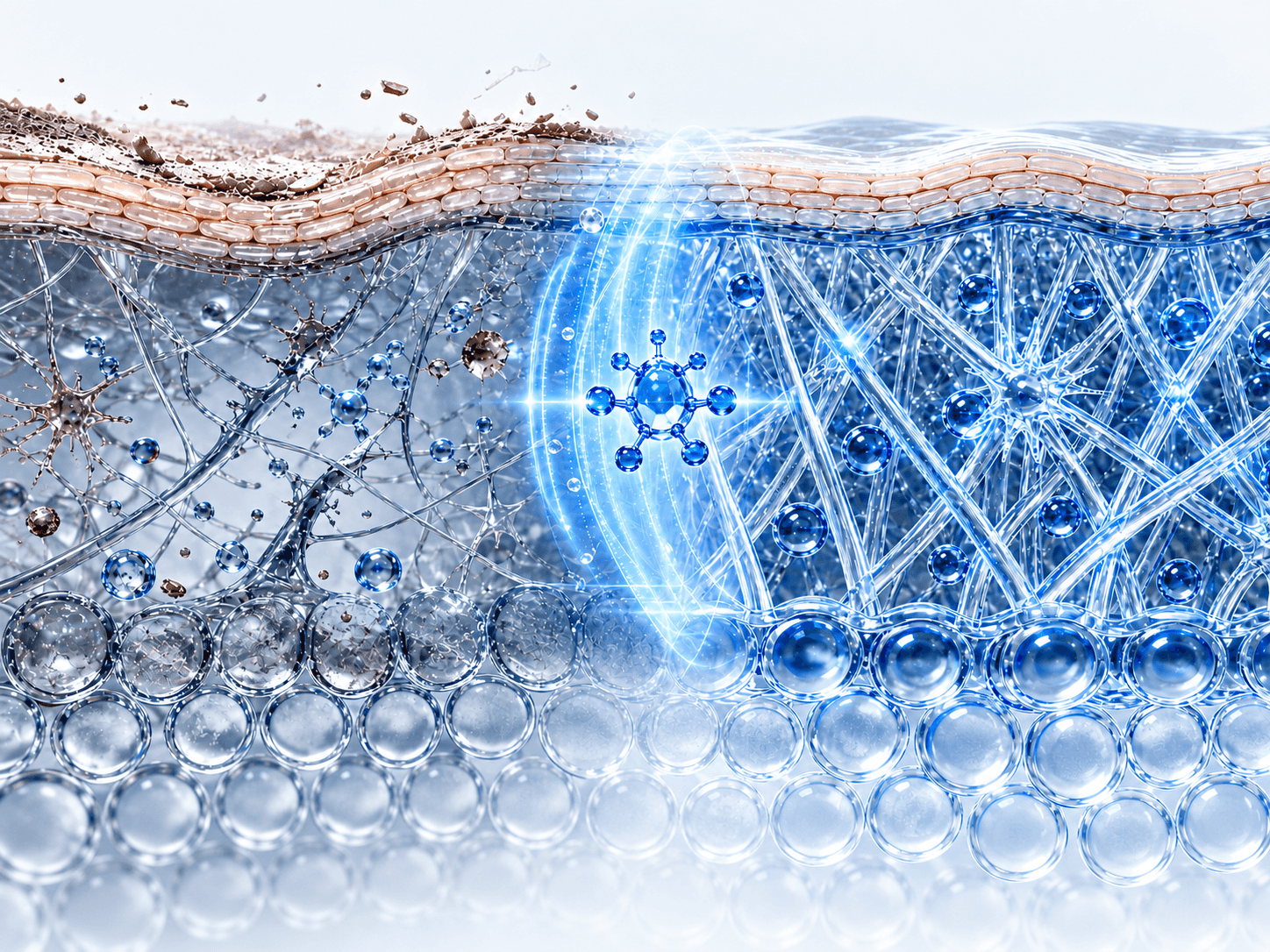
Focuses on the laxity, dullness, dryness, roughness and instability that arise with age, late nights, stress and environmental triggers—studying the relationship across inflammation-noise attenuation, oxidative-stress control, barrier homeostasis, matrix support and regenerative-signal regulation, to help skin maintain a more stable, refined and vital youth-leaning microenvironment.
Core Research Difference
Traditional anti-aging mostly stays at 'supplementing anti-aging ingredients to improve surface state'; AOWEISI focuses on why skin keeps showing laxity, dryness, dullness and roughness, and how a more systematic biomaterial care approach can help skin stay more balanced and stable under rhythm shifts and environmental change.
Research Mechanism Keywords
Inflammation noise reduction, oxidative-stress control, barrier homeostasis, matrix support, regenerative-signal regulation, full-pathway rejuvenation, inflammaging.
All content above is based on in vitro research, preclinical research, and biomaterial mechanism research, and does not constitute any promise of disease diagnosis, treatment, cure, prevention, or human clinical efficacy.
Mechanism pathway
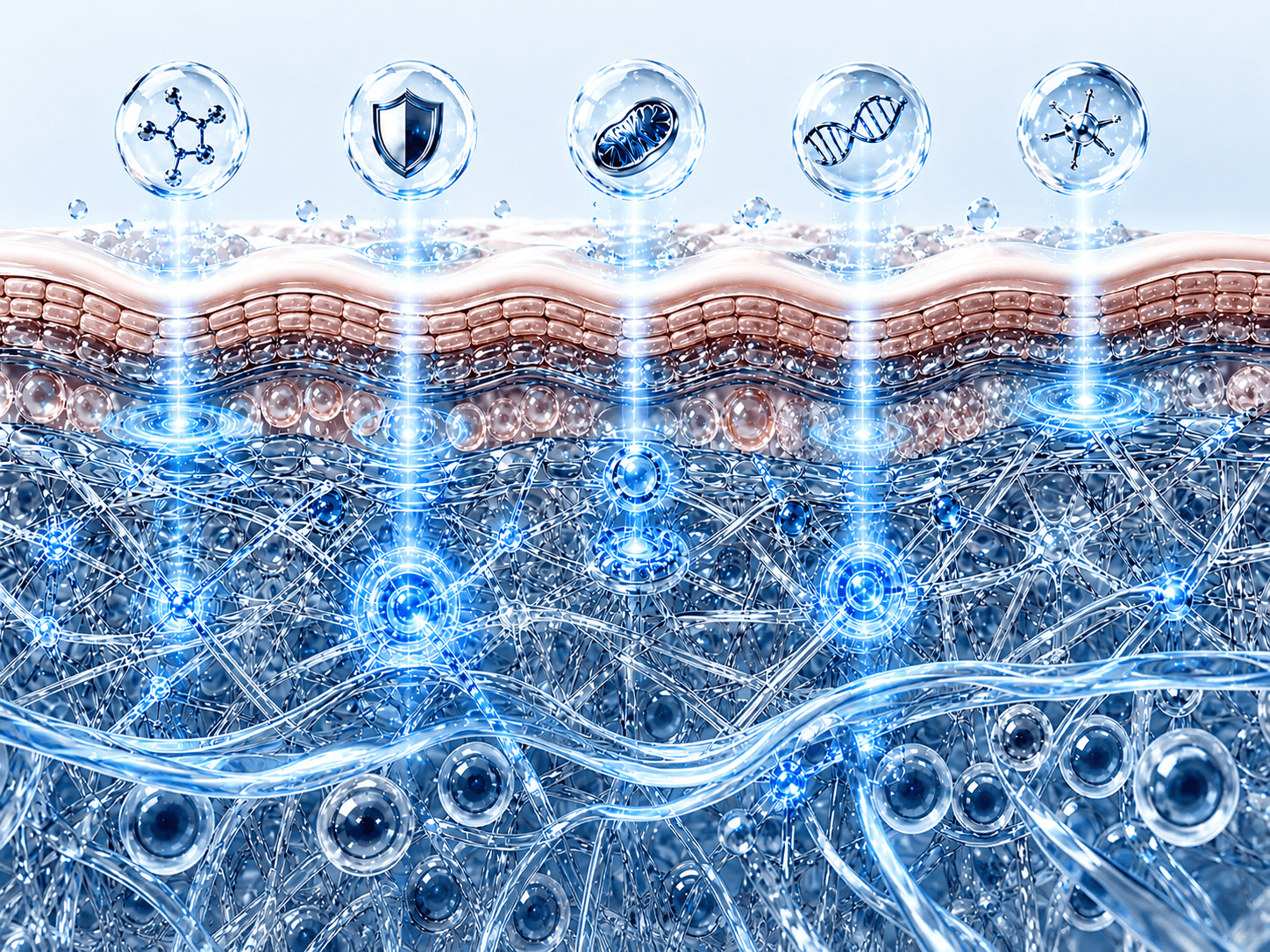
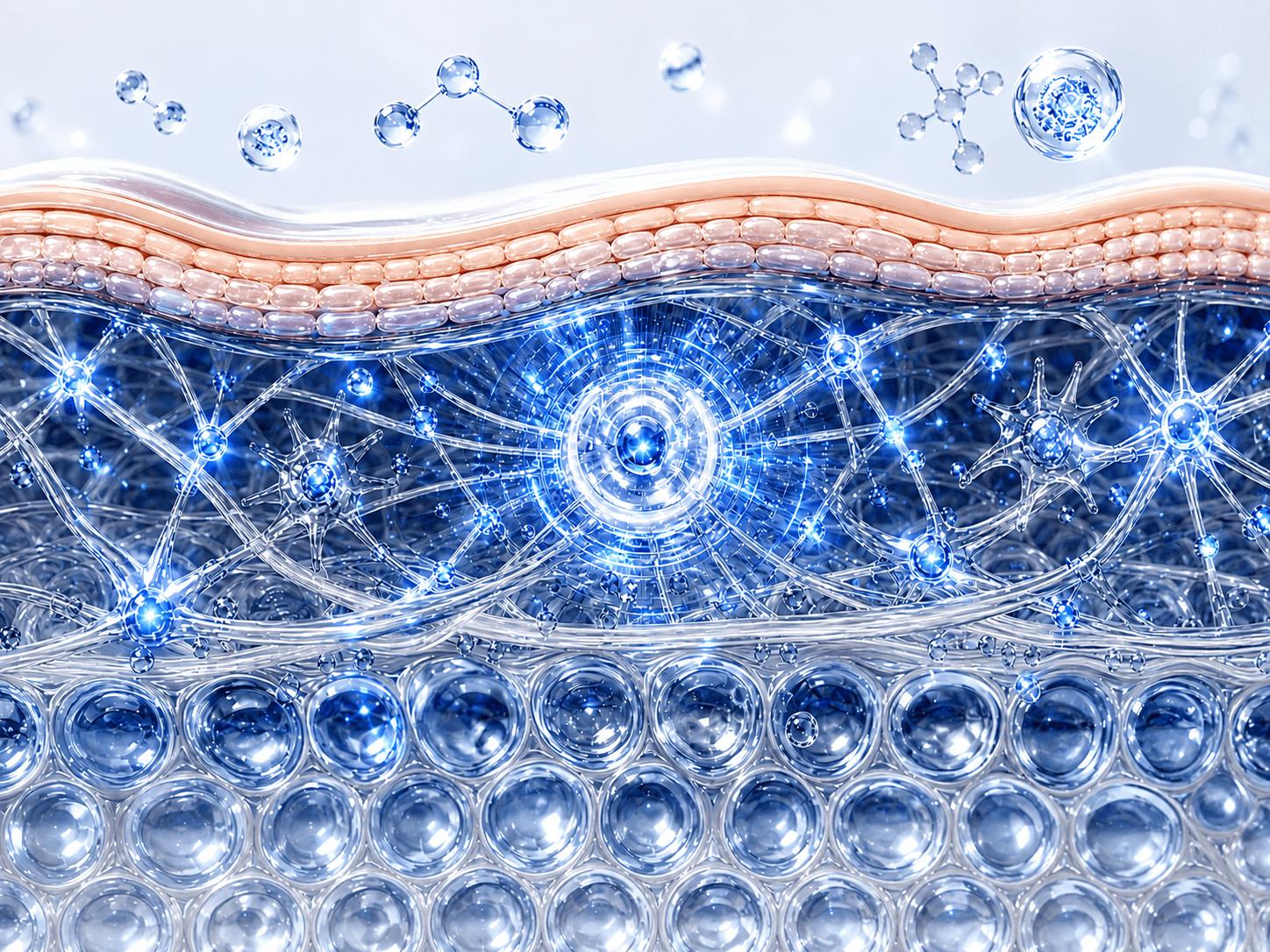
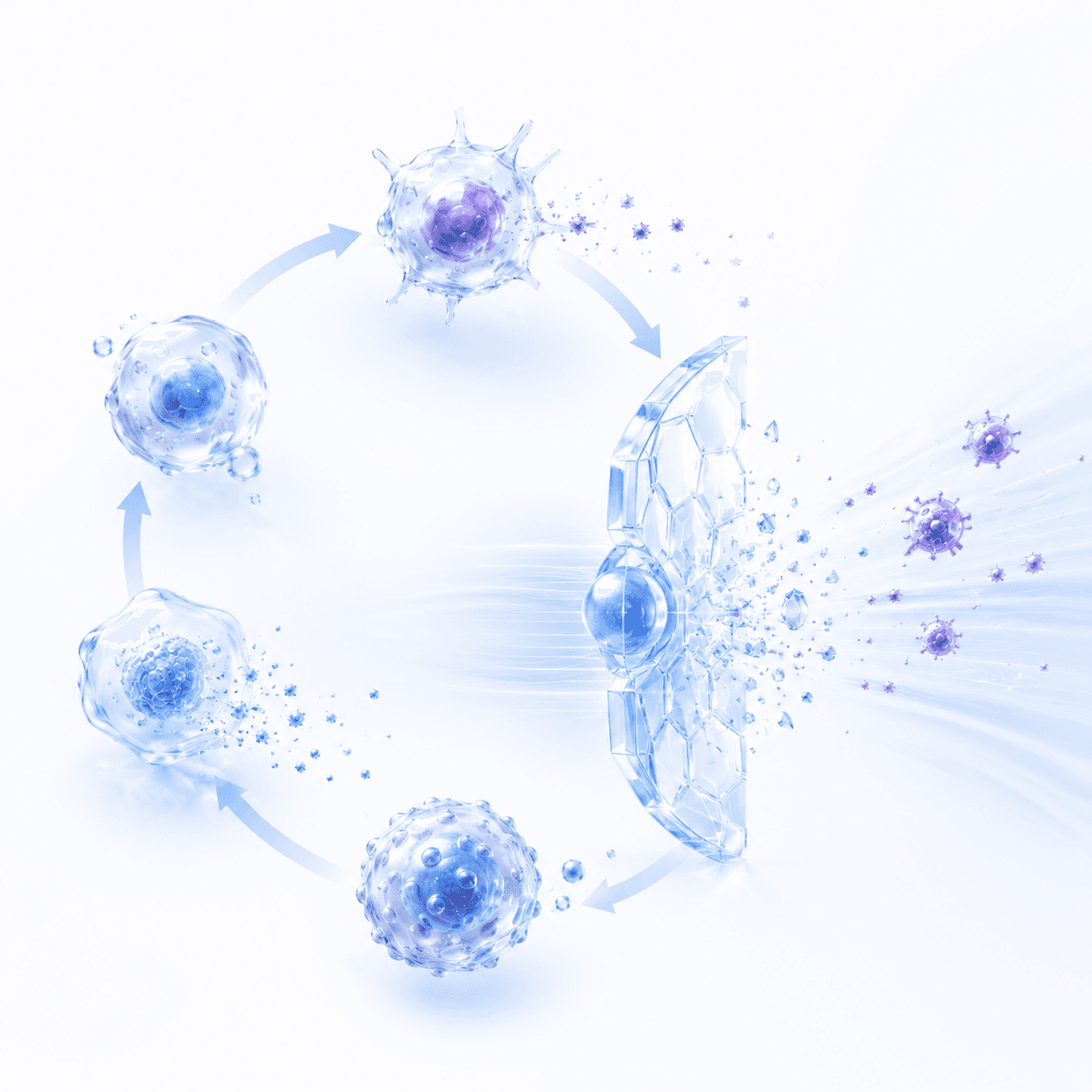
Focuses on the slower renewal rhythm, loose feel and reduced refinement that gradually appear with age, late nights, stress and environmental stimuli. Around FGF, Wnt/β-catenin, Notch and similar signals related to epidermal renewal and cellular activity, the work observes the shift from 'slower renewal' to 'weakened state'. The focus is not on supplementing a single ingredient, but on whether the skin's own renewal signals stay smooth—supporting an orderly daily youth-leaning state management.
Applicable scenarios
Mechanism pathway
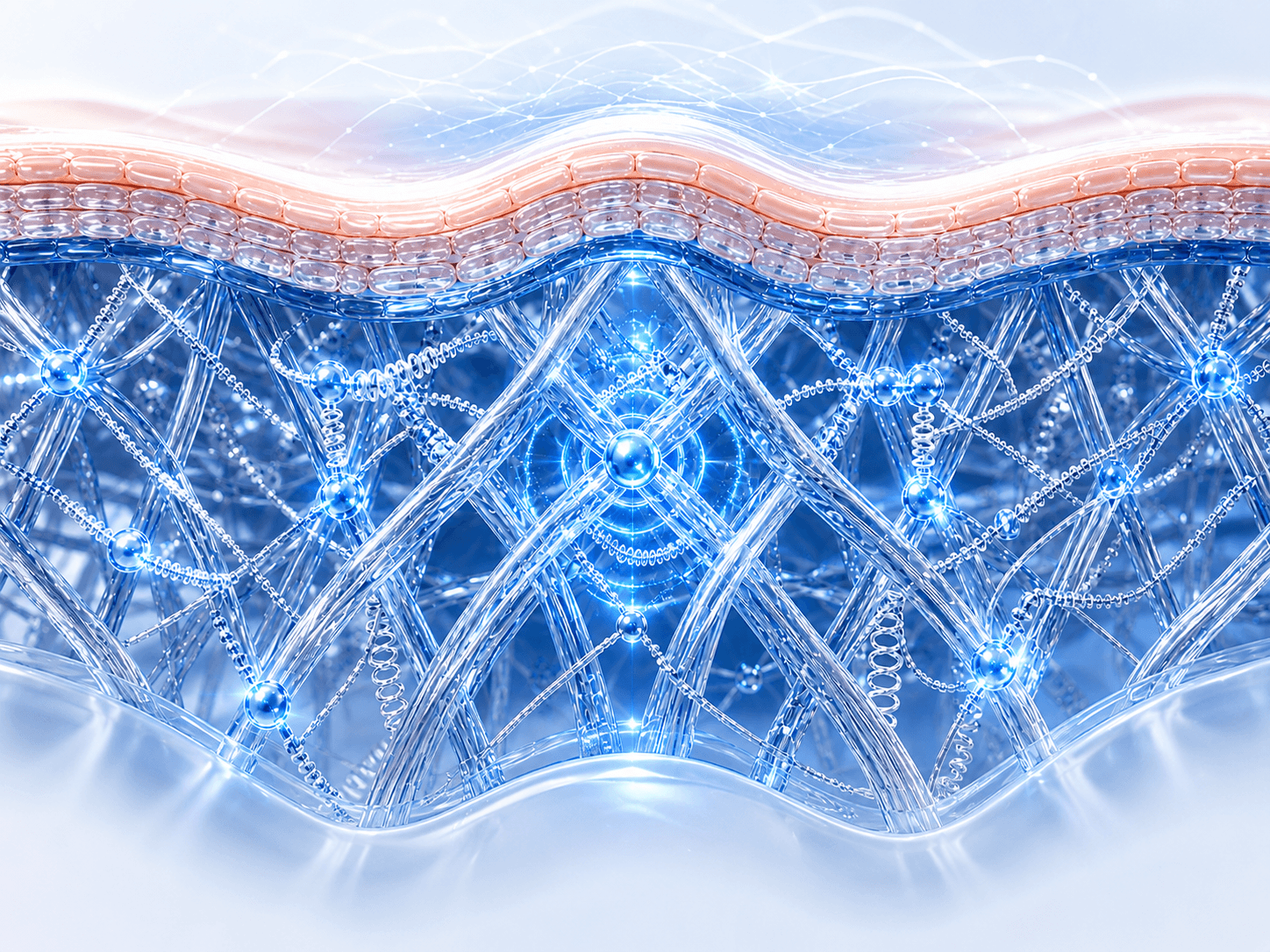
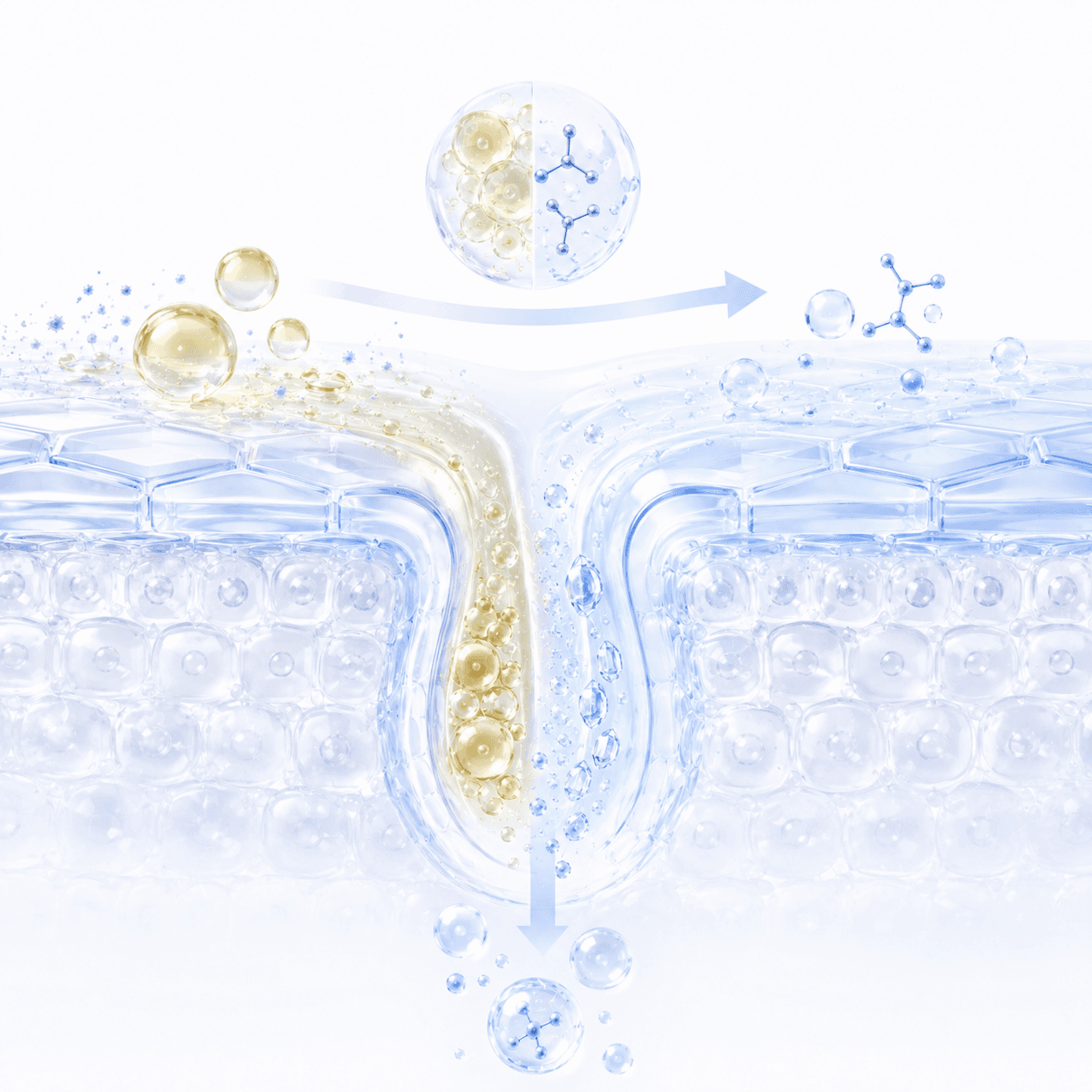
Focuses on laxity, coarser texture and reduced elasticity as the supporting structure changes over time. Around TGF-β/Smad, COL1A1, ELN, HAS2 and similar structural markers for collagen, elastin and hyaluronic-acid networks, the work observes the integrity and stability of the support system. Rather than 'adding a little collagen feel', it focuses on why the internal support weakens and how to help skin keep a plumper, more elastic quality.
Applicable scenarios

Mechanism pathway
Focuses on the process by which collagen is more easily broken down under light exposure, stress, oxidative environments and aging—so support gradually weakens. Around MMP-1-related collagen degradation pathways and their regulation, the work observes the dynamic shift from 'structure being consumed' to 'looser texture, more visible fine lines'. Rather than briefly masking surface concerns, it focuses on why the collagen network is continuously consumed and how to help maintain a steadier structural state.
Applicable scenarios
Mechanism pathway
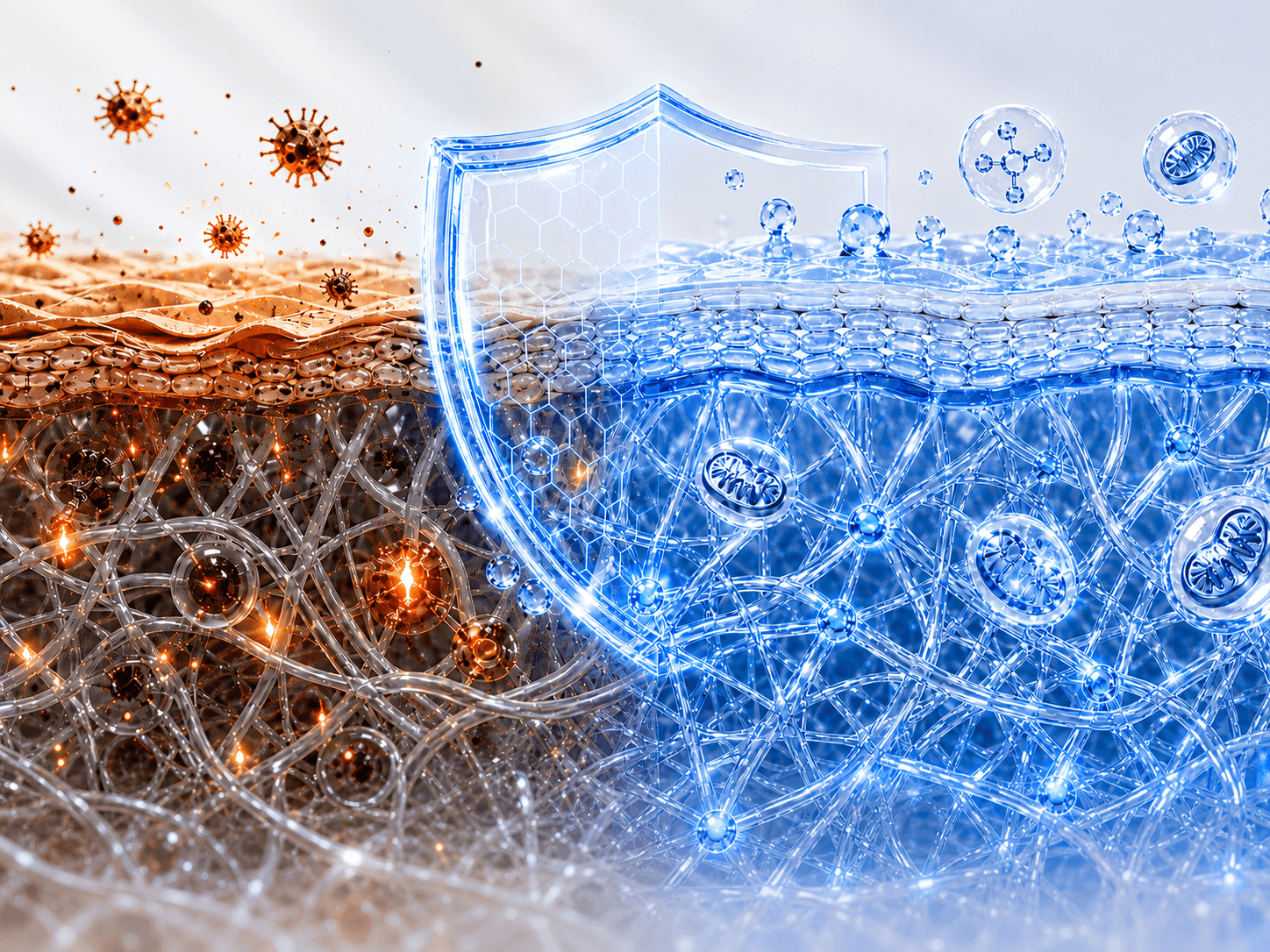
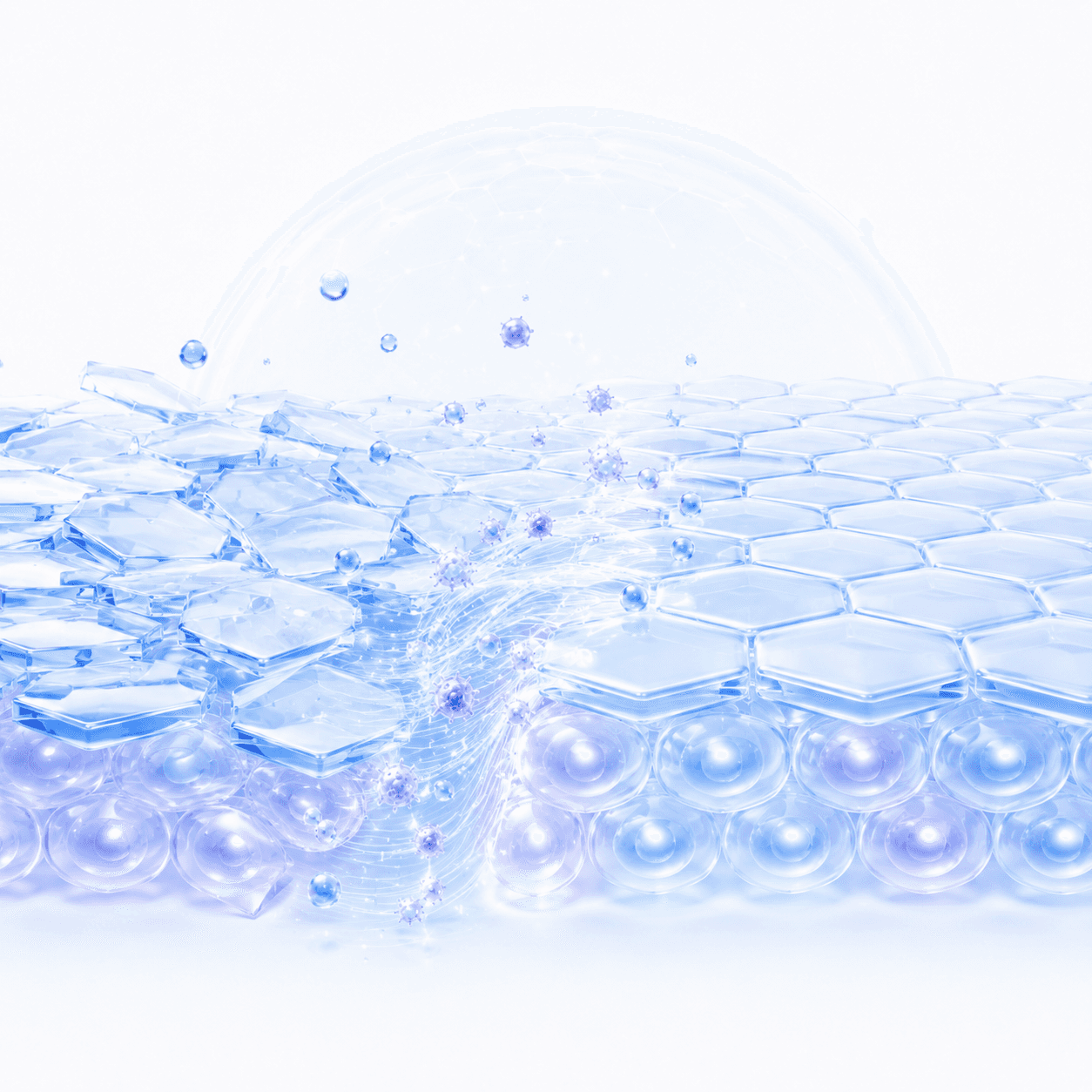
Focuses on dullness, roughness, deepened fatigue and instability under sun, air pollution, late nights and mental stress. Around NRF2, SIRT1, FOXO3, AMPK and similar pathways tied to antioxidant defense and cellular-energy management, the work observes the skin's coping capacity under external pressure. Rather than 'antioxidant' as a concept alone, it focuses on how skin keeps a better defense rhythm, metabolic vitality and low-burden state.
Applicable scenarios
Mechanism pathway
Takes a more holistic view: skin youthfulness depends not on a single signal but on synergy across inflammation-noise reduction, barrier stability, structural support and surface quality. Around the relationship between 'barrier baseline → skin-quality expression → youthful state', it observes why dryness, roughness, fragility, slackness and uneven texture appear together. Rather than briefly improving touch, it helps support a steadier environment, more balanced skin-quality expression and a more coordinated youthful state.
Applicable scenarios
This product is a biomaterial sample for research use only—in vitro studies, materials evaluation, and formulation development reference. Descriptions do not constitute diagnosis, treatment, cure, or prevention of any disease, nor a guarantee of consumer outcomes. For clinical use, medical aesthetics, or skin disease management, follow qualified physician or pharmacist guidance.
Research Links
Explore the mechanism-research and applied-research pages directly associated with this material.
Partnership
For material procurement, professional program partnerships, or custom development inquiries, please contact us through our partnership channel.